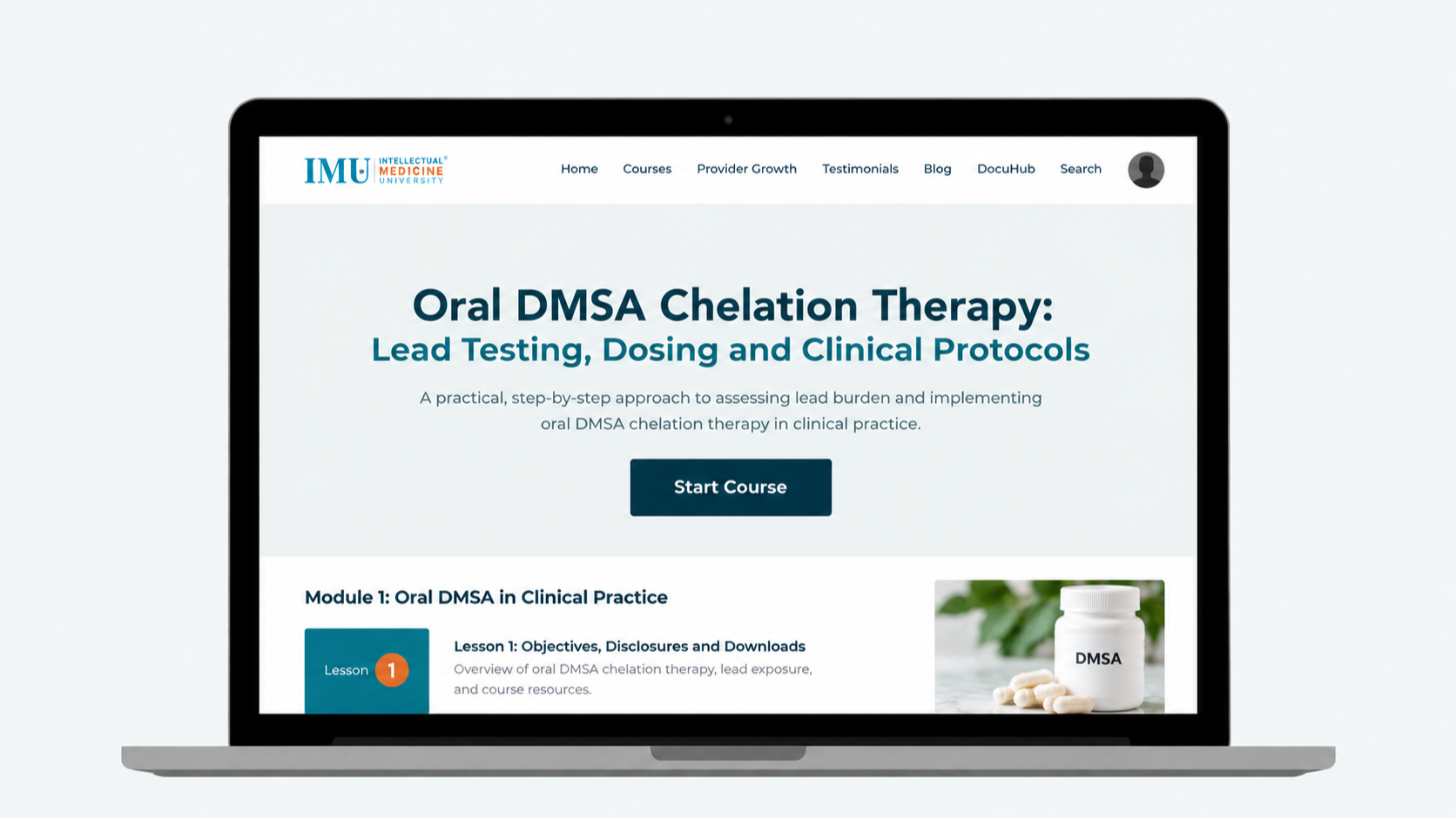
Oral DMSA Chelation Therapy: Lead Testing, Dosing and Clinical Protocols
Certification for Healthcare Providers
$149
Learn oral DMSA chelation therapy for chronic lead exposure, including patient selection, heavy-metal testing, dosing, safety and clinical protocols.
Add to CartBuy $200 use code SPEND200 for 10% off | Buy $500 use code SPEND500 for 15% off | Buy $1000 use code SPEND1000 for 25% off
1 hour
Time Investment
Lifetime
Access
Dr. Stephen Petteruti
Instructor
Comprehensive Guidance for Prescribing Oral DMSA Chelation Therapy
Oral DMSA is a chelation therapy used to support the reduction of lead burden in appropriately selected patients. Effective use requires careful patient selection, assessment of potential exposure sources, appropriate heavy-metal testing, individualized dosing, and ongoing monitoring throughout treatment.
Common challenges in DMSA chelation include identifying chronic lead exposure, interpreting pre- and post-treatment testing, managing treatment tolerance, reducing continued exposure, and determining when additional treatment cycles may be appropriate. This course provides clinicians with a structured framework for evaluating lead burden and implementing an oral DMSA protocol in clinical practice. DMSA Course Description
Led by Dr. Stephen Petteruti, the course addresses exposure history, baseline laboratory evaluation, provocative urine testing, a standardized six-hour urine collection protocol, DMSA dosing, N-acetylcysteine (NAC) administration, four-week treatment cycles, management of side effects, and follow-up testing. The curriculum also reviews contraindications, informed consent for off-label use, strategies for reducing ongoing lead exposure, and preliminary clinical outcomes that helped inform the development of the protocol.
Add to CartSelf-paced
Learn on your own schedule
100% Online
Access the course from anywhere
Protocols and consent forms
Included with your purchase
What You Will Learn
Oral DMSA Chelation Therapy Fundamentals
Examine the clinical foundations of oral DMSA chelation therapy for chronic lead exposure. Review patient selection, common sources of lead exposure, baseline and provocative urine heavy-metal testing, DMSA dosing, treatment cycles, safety considerations, and follow-up assessment.
Patient Selection
Evaluate patient suitability for oral DMSA chelation therapy. The course reviews exposure history, baseline laboratory evaluation, heavy-metal testing, contraindications and treatment risks, patient tolerance, and factors that influence treatment planning and the need for additional treatment cycles.
Dosing and Titration
Develop a structured approach to oral DMSA dosing and treatment scheduling. The course reviews the four-week treatment cycle, NAC administration, dose adjustments for nausea or poor tolerance, management of side effects, and follow-up testing to determine treatment response and whether additional cycles may be appropriate.
Contraindications and Medication Conflicts
Review key safety considerations before initiating oral DMSA therapy, including contraindications, baseline laboratory evaluation, treatment risks, potential side effects, and patient tolerance. The course also addresses informed consent for off-label use and appropriate monitoring throughout treatment.
Compounding and Formulation
Review practical considerations for implementing oral DMSA therapy, including selecting appropriate testing laboratories and compounding pharmacies, supporting patient adherence, managing treatment tolerance, and providing clear instructions throughout the treatment and follow-up process.
Monitoring and Follow-Up
Assess treatment tolerance and response throughout oral DMSA therapy. The course addresses follow-up testing, comparison of pre- and post-treatment lead levels, management of side effects, dose adjustments for poor tolerance, and determining whether additional treatment cycles or closer monitoring may be appropriate.
Managing Side Effects
Review strategies for recognizing and managing side effects during oral DMSA therapy. The course addresses nausea and poor treatment tolerance, appropriate dose adjustments, safety monitoring, and clinical considerations for modifying the treatment protocol based on individual patient response.
Patient Education and Expectations
Educate patients on the goals and expectations of oral DMSA chelation therapy. The course addresses informed consent for off-label use, treatment instructions, strategies for reducing ongoing lead exposure, potential side effects, follow-up testing, and the possibility that additional treatment cycles or closer monitoring may be needed based on response.
Practice Implementation
Develop a structured workflow for integrating oral DMSA chelation therapy into clinical practice. The course addresses patient evaluation, heavy-metal testing, treatment instructions, informed consent, coordination with testing laboratories and compounding pharmacies, documentation, safety monitoring, and follow-up throughout the treatment cycle.
Clinical Applications of Oral DMSA Therapy
Review the clinical use of oral DMSA in the context of:
Chronic lead exposure
Hypertension
Cognitive Decline
Cardiovascular disease
Kidney dysfunction
Integrative cancer-support protocols
Functional and integrative medicine
The course differentiates clinical experience from established indications and instructs providers on discussing off-label use without overstating the available evidence.
Add to CartWhy Providers Struggle With Oral DMSA
Oral DMSA requires more than simply prescribing a chelating agent. Providers must appropriately identify lead exposure, select patients, interpret testing, manage dosing and tolerance, and monitor response over multiple treatment cycles.
Without a structured process, testing, treatment, and follow-up can become inconsistent. This course provides a practical framework for evaluating lead burden, implementing oral DMSA therapy, managing side effects, and determining next steps based on follow-up testing.


IMU has helped me grow my business. Not only that, it has helped my patients and that is what matters to me the most! I have been able to help clients when they have certain conditions and autoimmune disorders. I love having the different protocols at my disposal! Thank you for having this program!
Learn From the Clinical Experience of Dr. Stephen Petteruti
Dr. Stephen Petteruti is a board-certified osteopathic physician with over 30 years of clinical experience in integrative, functional, and age-management medicine. He is the founder of Intellectual Medicine and Intellectual Medicine University.
Dr. Petteruti has integrated low-dose naltrexone into individualized clinical protocols and has trained healthcare providers in prescribing, patient education, clinical monitoring, and practice implementation. His instruction combines published research with insights gained from decades of patient care.
Learn More

Nurse practitioner
As a solo Nurse Practitioner, I truly appreciate the collaboration and support. Before taking these courses, I felt like I was just 'winging it'—but not anymore. The content, resources, and your willingness to answer questions have dramatically increased my confidence and contributed to the success of my venture. Thank you for everything!
Who Should Take This Course?
Oral DMSA Chelation Therapy is intended for licensed prescribing providers, including:
Physicians
Nurse practitioners
Physician assistants
Medical directors
Integrative medicine providers
Functional medicine providers
Pain-management providers
Clinicians working with chronic inflammatory or autoimmune conditions
Course implementation must remain within each provider’s prescribing authority, professional licensure, and applicable state regulations.
What Is Included?
Online, self-paced course access
Instruction from Dr. Stephen Petteruti
Oral DMSA pharmacology and mechanism review
Patient-selection framework
Dosing and titration principles
Contraindication and interaction review
Compounding and formulation guidance
Monitoring and follow-up strategies
Patient-education framework
Practice implementation guidance
Downloadable clinical resources
Intellectual Medicine University completion certificate
Add to Cart
Oral DMSA Chelation Therapy: Lead Testing, Dosing and Clinical Protocols
Program Curriculum
-
Module 1: Oral DMSA Chelation Therapy: Lead Testing, Dosing and Clinical Protocols
4 lessons- Lesson 1: Objectives, Disclosures and Downloads
- Acknowledgment
- Lesson 2: Presentation with Dr. Petteruti
- Oral DMSA Chelation Therapy Post Test
Current Evidence and Clinical Standards
Oral DMSA chelation requires careful patient selection, appropriate testing, and ongoing monitoring. The course reviews contraindications and treatment risks, informed consent for off-label use, and strategies for managing side effects or poor treatment tolerance. DMSA Course Description
The course also examines preliminary findings from Dr. Petteruti’s seven-patient pilot study. Six participants experienced measurable reductions in lead burden, with an average reduction of 34.9% among responders. These findings helped inform the clinical protocol while highlighting the need for additional research. DMSA Course Description
Providers learn how to evaluate treatment response by comparing pre- and post-treatment lead levels, determine when additional treatment cycles or closer monitoring may be appropriate, and incorporate safety, documentation, and follow-up into clinical practice.
Selected References
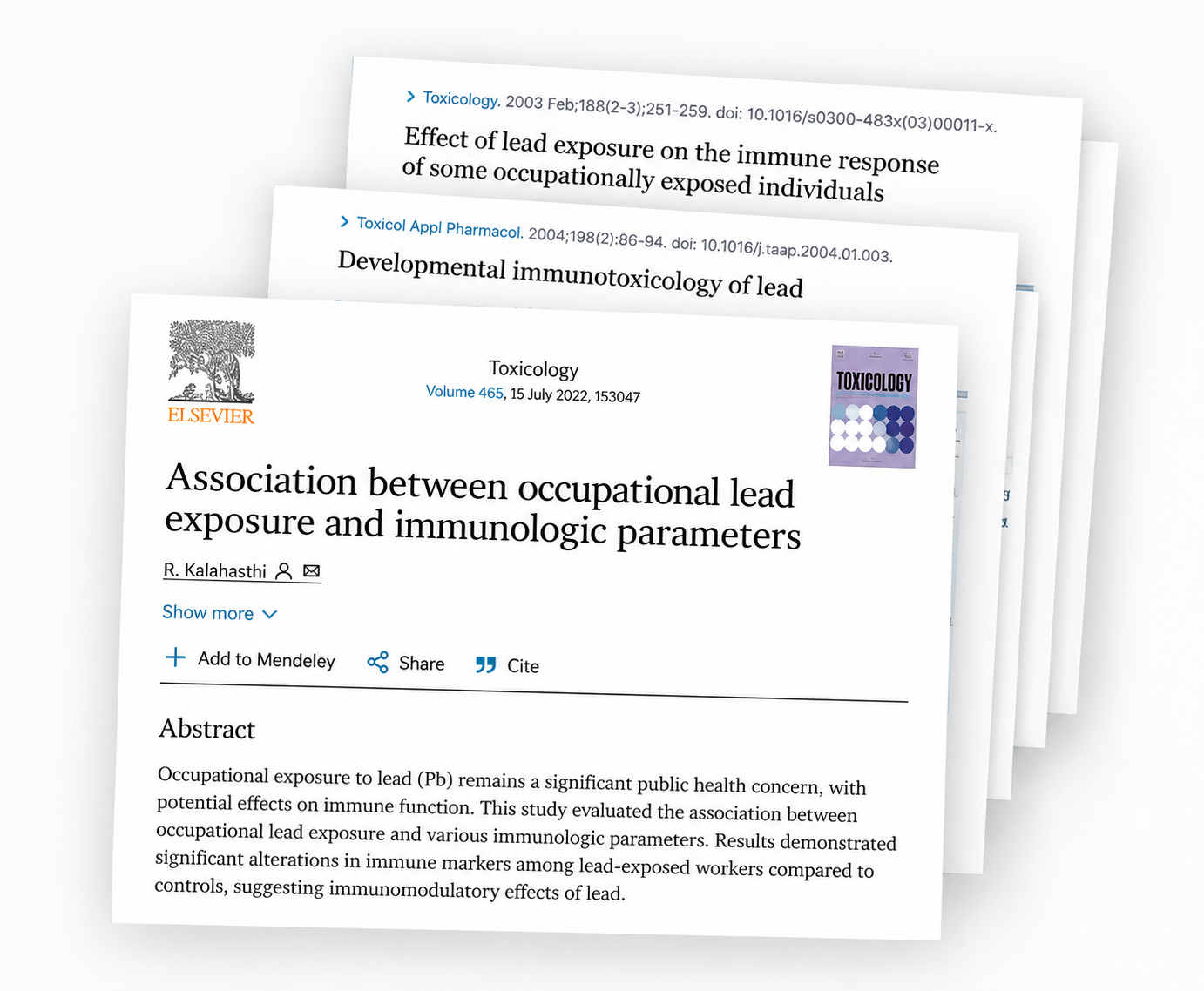
Kalahasthi R. Association between occupational lead exposure and immunologic parameters. Toxicology. 2022;465:153047.
Mishra KP, Singh VK, Rani R, et al. Effect of lead exposure on the immune response of some occupationally exposed individuals.
Toxicology. 2003;188(2-3):251-259.
Dietert RR, Lee JE, Hussain I, Piepenbrink M. Developmental immunotoxicology of lead. Toxicol Appl Pharmacol. 2004;198(2):86-94.
Gürer-Orhan H, Sabır HU, Özgüneş H. Correlation between clinical indicators of lead poisoning and oxidative stress parameters in
controls and lead-exposed workers. Toxicology. 2004;195(2-3):147-154.
Dobrakowski M, Pawlas N, Hudziec E, et al. Glutathione, glutathione-related enzymes, and oxidative stress in individuals with subacute
occupational exposure to lead. Environ Toxicol Pharmacol. 2016;45:235-240.
International Agency for Research on Cancer. Inorganic and Organic Lead Compounds. IARC Monographs on the Evaluation of
Carcinogenic Risks to Humans. Vol 87. International Agency for Research on Cancer; 2006.
Liao LM, Friesen MC, Xiang YB, et al. Occupational lead exposure and associations with selected cancers: the Shanghai Men’s and
Women’s Health Study cohorts. Environ Health Perspect. 2016;124(1):97-103. doi:10.1289/ehp.1408171.
The Add-on You Didn't Know You Needed
USP 797 Compliance for IV Vitamin Therapy: A Comprehensive Training Course | 10 CEU
Achieve sterile-compounding readiness for IV vitamins with facility design tips, SOPs, and QA checklists.
$499.00 USD

Medical Practice Finance Made Simple | 1.5 CEU
Learn medical practice finance, pricing, COGS, cash flow, and profitability.
$149.00 USD
Alpha Lipoic Acid Therapy: IV Protocols and Clinical Applications | 1.5 CEU
Learn IV and oral Alpha Lipoic Acid protocols for liver support, neuropathy, cognitive decline, cancer care & more in this clinical CE course.