Port Access Essentials: Step-by-Step Implanted Port Training for Nurses
Free Online Nursing Course
FREE
Gain the confidence and competence to access implanted vascular ports safely—every time.
Add to Cart
2 hours
Time Investment
Lifetime
Access
Shannon Petteruti, NP
Instructor
Gain practical skills in preparing, accessing, assessing, flushing, de-accessing, and troubleshooting implanted vascular access ports through comprehensive instruction and a detailed procedural demonstration.
Implanted port access is a critical skill required in oncology, infusion, home health, and acute-care nursing. However, many nursing programs offer limited or no hands-on training in this procedure. As a result, nurses frequently acquire port access skills post-graduation, often during brief workplace orientations.
I developed Port Access Essentials to address this training gap. This free online nursing course offers a practical introduction to accessing and de-accessing implanted vascular ports using sterile technique and a standardized, step-by-step process.
The course is designed to help nurses understand the procedure before performing it under the supervision required by their employer, facility, and state scope-of-practice rules.
Learn From the Clinical Experience of Shannon Petteruti, Nurse Practitioner
Shannon Petteruti, NP, created Port Access Essentials based on more than 17 years of nursing and clinical experience. Her background includes IV therapy, vascular access, infusion procedures, clinical education, and direct patient care.
Similar to many nurses, Shannon did not receive implanted port-access training during her nursing education. She acquired this skill through clinical practice and observed that nurses are frequently expected to perform procedures without sufficient preparation. Written policies alone do not demonstrate how to organize supplies, assess the port, maintain sterile technique, or respond appropriately when blood return is not obtained.
Shannon developed this course to deliver the practical instruction frequently absent from formal nursing education. Through clear explanations and step-by-step demonstrations, she enables nurses to understand the procedure, avoid common errors, and approach implanted port access with enhanced clinical judgment and preparation.
Learn More
What You Will Learn
Port Access Essentials integrates an evidence-informed video lesson with a comprehensive procedural demonstration. Participants observe the appearance of an accessed implanted port and follow the process from equipment preparation to post-procedure care.
The course covers:
Supplies needed to access an implanted vascular port
Patient and equipment preparation
Port identification and site assessment
Sterile technique and infection-prevention practices
Selection and handling of a non-coring needle
Step-by-step implanted port access
Blood-return verification and flushing
Safe port de-access
Dressing and post-access care
Documentation considerations
Common port-access mistakes
Initial troubleshooting when blood return is absent
The course also addresses findings that necessitate stopping the procedure, reassessing, adhering to facility protocols, or notifying the appropriate provider or vascular access specialist.
Free training
Get all the information without cost
Self-paced
Learn on your own schedule
100% Online
Access the course from anywhere
Video guide
A procedural demonstration is included
Port Access Essentials: Step-by-Step Implanted Port Training for Nurses
Program Curriculum
-
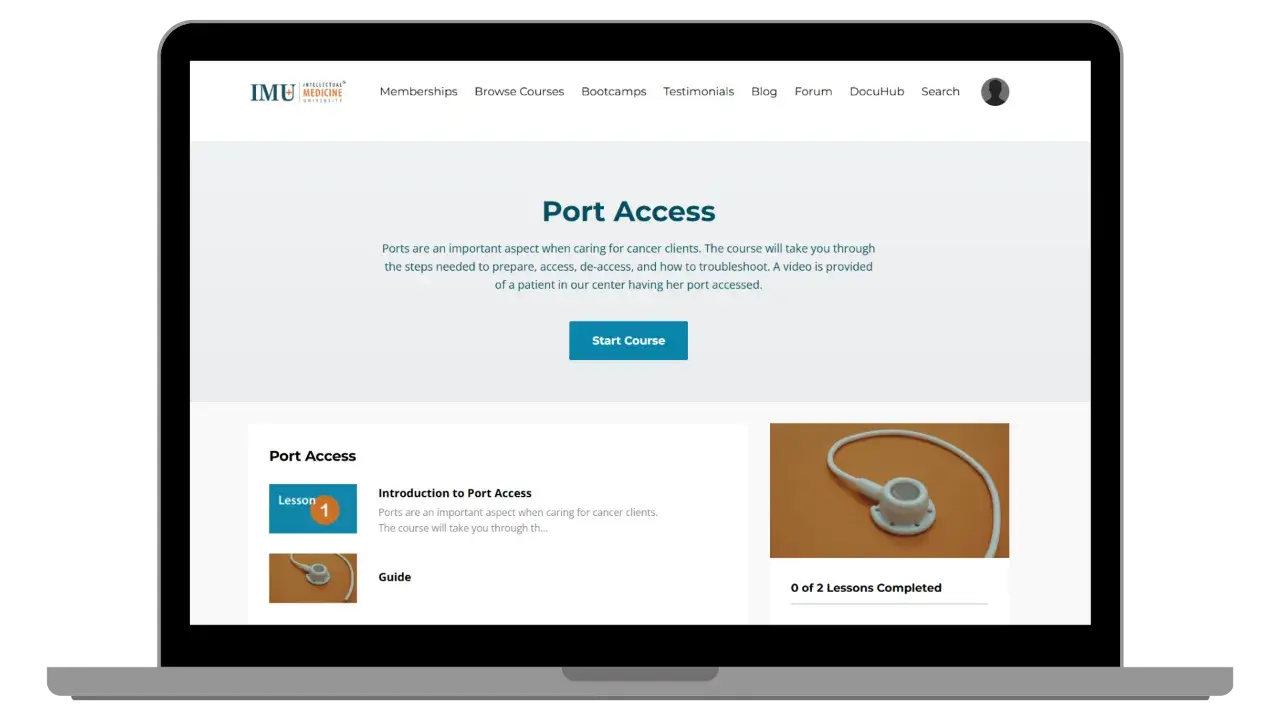
Port Access
2 lessons- Introduction to Port Access
- Guide
Build a Safer, More Consistent Process
Effective port access requires comprehensive assessment of the site, maintenance of sterile technique, confirmation of patency in accordance with facility policy, recognition of potential complications, and accurate documentation of the procedure.
The course details each stage of the process, clarifying both the required actions and their underlying rationale. It also reviews common errors that elevate the risk of contamination, failed access, patient discomfort, infiltration, or device damage.
Troubleshooting guidance identifies common causes of absent blood return and outlines appropriate initial nursing responses. The course emphasizes the limitations of independent troubleshooting and the necessity of adhering to organizational policies prior to medication or infusion administration.
Who Should Take This Course?
Port Access Essentials is designed for:
Nursing students preparing for clinical practice
New graduate nurses
Registered nurses entering oncology or infusion nursing
Travel nurses who need a practical refresher
Home infusion and home health nurses
Acute-care nurses
Experienced clinicians returning to infusion care
Nurses who received limited port-access instruction during nursing school
This course also serves as a valuable review for nurses preparing for employer-based skills validation.
Add to Cart
Nurse practitioner

With so much information out there, it’s hard to know who to trust and who’s just selling something. But Shannon is genuine, knowledgeable, and truly committed to helping others. IMED University has transformed my life, and I’ll be recommending it forever!
Course Features
The self-paced format enables participants to complete the training according to their own schedules. Video instruction facilitates detailed observation of equipment, the port-access process, sterile technique, and the de-access procedure, offering greater clarity than written instructions alone.
The course includes:
Evidence-informed instruction
High-definition procedure demonstration
Port-access and de-access guidance
Troubleshooting education
Downloadable protocol resources
Documentation and consent templates
Competency quiz
Downloadable skills checklist
Certificate of completion
Upon completion of the lesson, participants may take the knowledge quiz and download the skills checklist for use during supervised competency validation.
Add to Cart

I have gotten so much support and education from IMedU. Everyone at IMU has responded to any question I had from setting up my new business to making sure my SOP and protocols were solid. The courses are great. The humans are even better!
Training Versus Clinical Competency
Port Access Essentials offers educational content and a certificate of completion. However, it does not substitute for hands-on training, supervised skills validation, employer credentialing, or adherence to facility-specific policies.
Clinical competency must be evaluated by an authorized professional within the practice setting. It is essential to comply with state nursing regulations, employer policies, device instructions, and established infection-control standards.
Start Your Free Port-Access Training
Entering clinical practice without a clear understanding of expected procedures should not be required.
Enroll in Port Access Essentials to receive step-by-step implanted port-access training developed by a nurse with over 17 years of clinical experience. The course covers equipment, safety principles, procedural steps, common errors, and troubleshooting strategies essential for caring for patients with implanted vascular ports.
The Add-on You Didn't Know You Needed
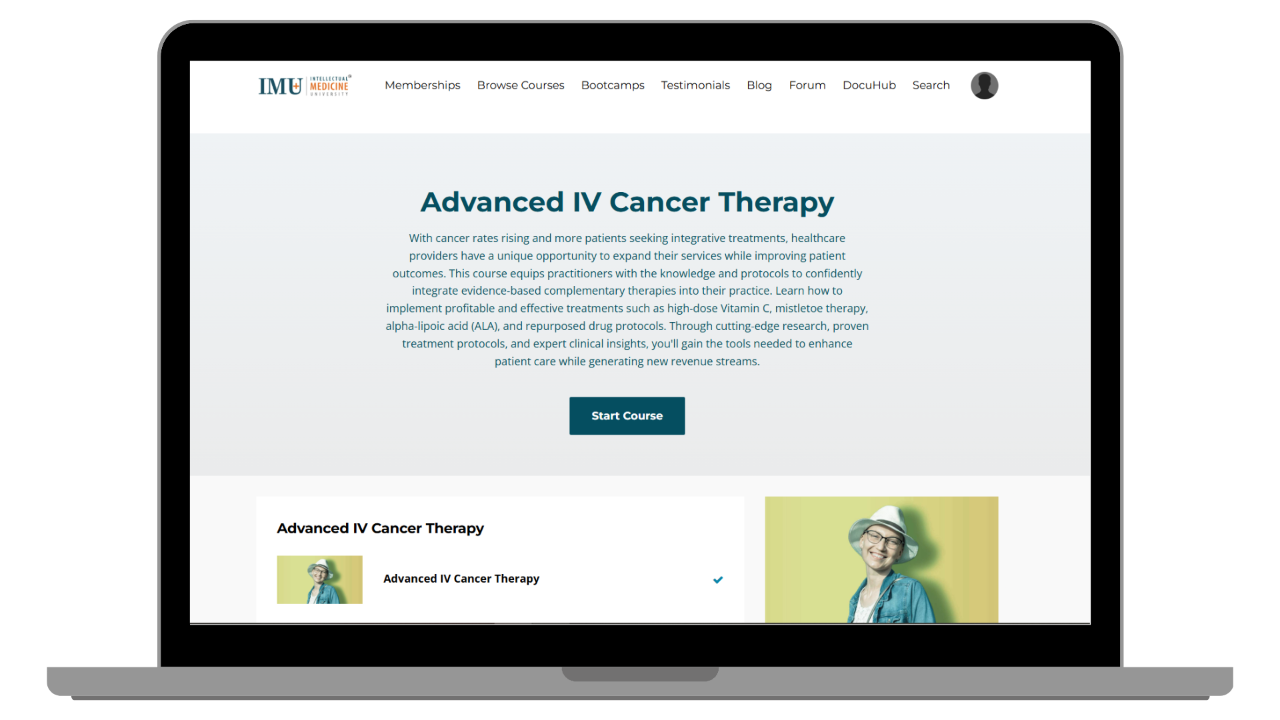
Advanced IV Therapy in Integrative Cancer Care | 8 CEU
Add high-dose vitamin C, mistletoe, ALA, and repurposed drugs to improve cancer outcomes and expand your services.
$499.00 USD
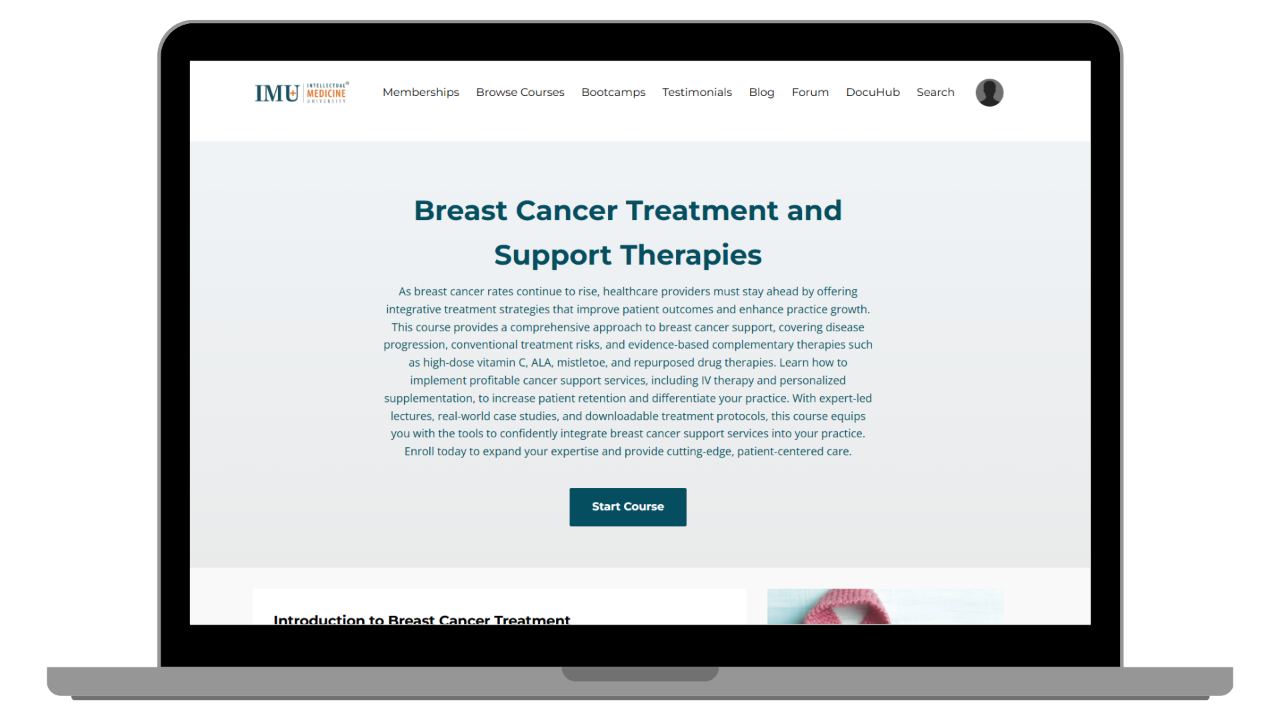
Breast Cancer Treatment and Support Therapies | 1.5 CEU
Deliver evidence-based, integrative breast-cancer support—high-dose vitamin C, ALA, mistletoe, repurposed drugs, and IV protocols—to boost patient outcomes and practice revenue.
$149.00 USD
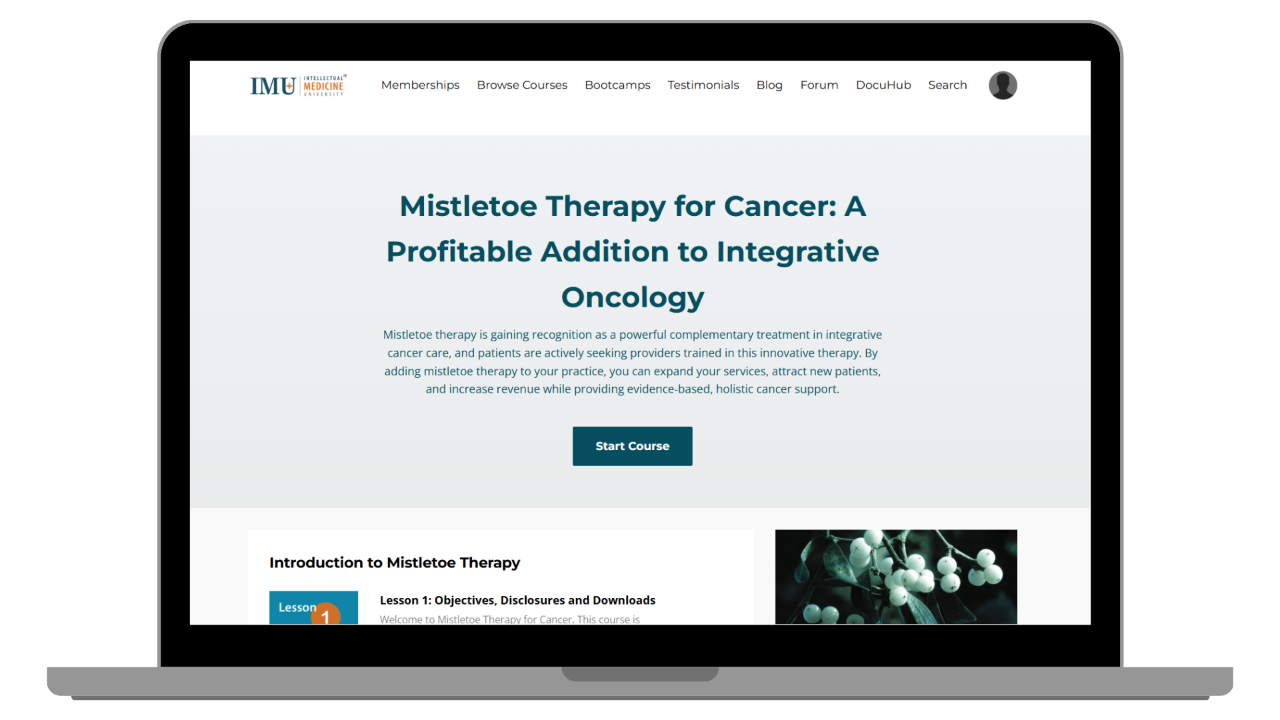
Mistletoe Therapy for Cancer: A Profitable Addition to Integrative Oncology | 2 CEU
Integrate viscum dosing and administration into oncology care, complete with business guidance for recurring revenue.