Integrative Breast Cancer
Certification for Healthcare Providers
$149
Learn breast cancer staging, IV therapies, supplements, repurposed medications, safety, and integrative patient support.
Add to Cart
1.5
CEU
90-minute
Time Investment
Lifetime
Access
Dr. Stephen Petteruti
Instructor
Patients diagnosed with breast cancer frequently seek additional support beyond standard oncology appointments.
Common areas of inquiry include nutrition, dietary supplements, intravenous (IV) therapy, management of treatment-related symptoms, metabolic health, and strategies to preserve quality of life throughout and following treatment.
The Integrative Breast Cancer Certification for Healthcare Providers offers licensed medical professionals an evidence-based framework for addressing these patient questions. Led by Dr. Stephen Petteruti, this online program covers breast cancer staging, conventional treatments, complementary therapies, repurposed medications, supplementation, and long-term supportive care.
The program emphasizes therapies that are integrated with coordinated oncology care. Complementary therapies are not presented as substitutes for surgery, chemotherapy, radiation, endocrine therapy, targeted therapy, immunotherapy, or other medically indicated treatments.
Understand Breast Cancer Biology and Staging
Breast cancer is not one disease. Its behavior and treatment depend on the stage, tumor biology, hormone-receptor status, HER2 status, molecular characteristics, and whether the disease has spread beyond the breast.
This program details the distinctions among localized, regional, and metastatic breast cancer. Participants review the four major stages of breast cancer and examine how disease stage influences prognosis, oncology treatment, monitoring, and supportive care priorities.
The course also addresses delayed recurrence. Certain breast cancers can return years after initial treatment, making long-term monitoring and health support relevant after active oncology treatment ends.
Participants review the roles of mammography, ultrasound, MRI, biopsy, pathology, receptor testing, and other diagnostic tools used in breast cancer screening and evaluation. This foundational knowledge enables healthcare providers to interpret information patients receive from their oncology teams and apply it within their professional practice.
Add to Cart100% Online
Access the course from anywhere
Self-paced
Learn on your own schedule
Protocols and consent forms
Included with your purchase


As a medical professional, I’m always looking for ways to improve both my clinical skills and the way I connect with my patients. Enrolling in IMU’s cancer course was one of the best decisions I’ve made for my practice. Since completing the course, I’ve become more confident and compassionate in my care. I can't thank them enough! I highly recommend taking any of the courses in their program.
Understand Conventional Breast Cancer Treatment
Providers offering integrative support must understand the treatments their patients already receive. The program reviews breast surgery, chemotherapy, radiation, endocrine therapy, targeted therapy, and immunotherapy.
Dr. Petteruti explains how these treatments work, why they are recommended, and which adverse effects patients frequently experience. Topics include fatigue, nausea, neuropathy, cognitive complaints, nutritional challenges, lymphedema, changes in body composition, cardiovascular concerns, hormonal symptoms, and reduced quality of life.
Understanding conventional treatment enables providers to identify potential interactions and determine when a complementary therapy may be inappropriate. The program emphasizes the importance of communicating with the patient’s oncology team when a proposed therapy could influence treatment response, laboratory findings, bleeding risk, glucose regulation, kidney function, or medication metabolism.
Learn From the Clinical Experience of Dr. Stephen Petteruti
Dr. Stephen Petteruti is a board-certified physician with more than 30 years of clinical experience. His background includes family medicine, functional medicine, metabolic health, anti-aging medicine, IV nutrient therapy, and integrative support for patients with complex health conditions.
Throughout his career, Dr. Petteruti has developed and supervised advanced infusion programs involving high-dose IV vitamin C, alpha-lipoic acid, glutathione, nutritional infusions, and other supportive therapies. His experience includes patient evaluation, laboratory testing, treatment planning, infusion safety, clinical monitoring, and the practical requirements of implementing integrative services in a medical practice.
Dr. Petteruti developed this certification program to address the need for comprehensive provider education beyond downloadable protocols. Effective integrative care requires understanding the patient’s diagnosis, disease stage, tumor characteristics, conventional treatment plan, contraindications, potential interactions, and the quality of evidence supporting each complementary therapy.
The instruction integrates published research with Dr. Petteruti’s extensive clinical experience as a physician, practice owner, and healthcare educator.
Learn More
Evaluate Complementary Breast Cancer Support Therapies
The certification program reviews several therapies used in functional and integrative cancer support. These include high-dose IV vitamin C, alpha-lipoic acid, mistletoe therapy, glutathione, nutritional interventions, and individualized supplementation.
For each therapy, Dr. Petteruti examines the proposed mechanisms, clinical applications, patient-selection considerations, contraindications, monitoring requirements, and current state of research.
Participants learn to differentiate between therapies evaluated for symptom relief, quality of life, or treatment tolerance and those under investigation for potential effects on cancer biology. This distinction supports accurate communication and prevents the misrepresentation of emerging research as established outcomes.
Included Therapies
High-Dose IV Vitamin C
High-dose intravenous vitamin C is one of the most recognized therapies in integrative oncology. The program examines how IV administration differs from oral vitamin C and why route and concentration affect its proposed activity.
You will review baseline testing, patient selection, dosing considerations, infusion procedures, and clinical monitoring. Safety topics include G6PD status, kidney function, renal stone history, fluid tolerance, glucose-monitor interference, and coordination with conventional treatment.
The objective is to ensure participants understand both the clinical rationale and the limitations of the available evidence.
Alpha-Lipoic Acid and Glutathione
Alpha-lipoic acid and glutathione are frequently used to address oxidative stress, mitochondrial function, metabolic health, and neurological support. Their use during cancer treatment requires careful evaluation because timing, treatment goals, and interactions matter.
Dr. Petteruti reviews the clinical reasoning behind these therapies, available routes of administration, dosing considerations, contraindications, and monitoring. You will also examine the ongoing debate surrounding antioxidant use during chemotherapy and radiation so you can make informed decisions based on the patient’s treatment plan.
Mistletoe Therapy
Mistletoe, also known as Viscum album, has been used in European integrative oncology for decades. Research has examined its potential role in quality of life, treatment tolerance, fatigue, and symptom support.
The program reviews patient selection, routes of administration, dose progression, expected local and systemic reactions, contraindications, and clinical monitoring. You will learn how to distinguish an expected treatment response from a reaction requiring dose reduction, discontinuation, or medical evaluation.
Repurposed Medications and Supplementation
Researchers continue to study established medications for applications beyond their original indications. This certification program reviews selected repurposed medications used or investigated within integrative cancer support.
Dr. Petteruti examines proposed mechanisms, potential applications, adverse effects, medication interactions, laboratory monitoring, and the limitations of current evidence. These medications are presented as emerging or off-label approaches, not established replacements for oncology treatment.
The supplementation section encourages providers to move beyond generic product lists. Recommendations should be tailored to the patient’s diagnosis, treatment plan, laboratory results, nutritional status, medications, and individual risk factors.

Develop Individualized Support Plans
Integrative breast cancer support requires more than assigning the same protocol to every patient. An appropriate plan must consider disease stage, tumor characteristics, current oncology treatments, medical history, organ function, medications, supplements, symptoms, and personal goals.
The program instructs participants on organizing this information to develop a structured supportive care plan. It also covers monitoring patient response, documenting clinical decisions, reassessing treatment, and identifying when a therapy should be modified or discontinued.
Patient communication and informed consent are emphasized throughout the program. Patients must be informed of the potential benefits, risks, supporting evidence, costs, and limitations associated with each service they receive.
Program Features
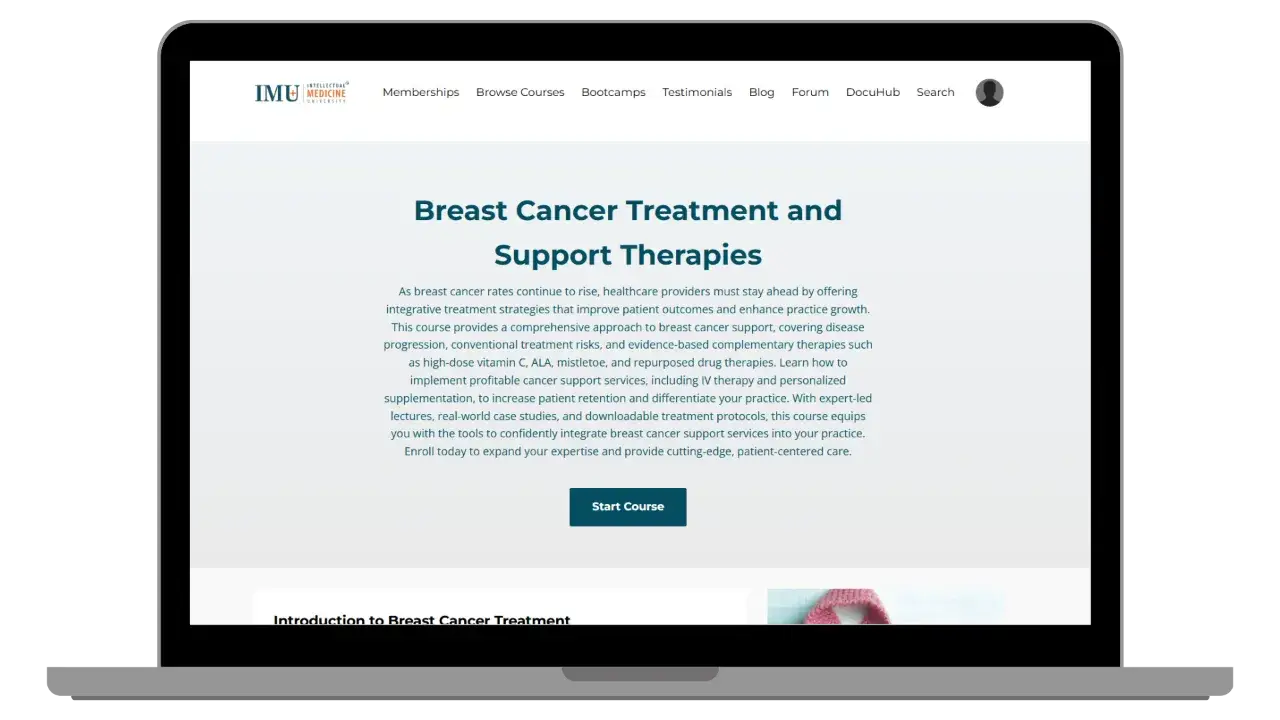
The Integrative Breast Cancer Certification for Healthcare Providers includes self-paced video instruction from Dr. Stephen Petteruti, clinical case discussions, downloadable protocols, patient-screening guidance, documentation resources, and implementation tools.
After completing the required lessons and passing the final assessment, participants receive 1.5 continuing education hours and an Integrative Breast Cancer Certificate from Intellectual Medicine University.
Add to Cart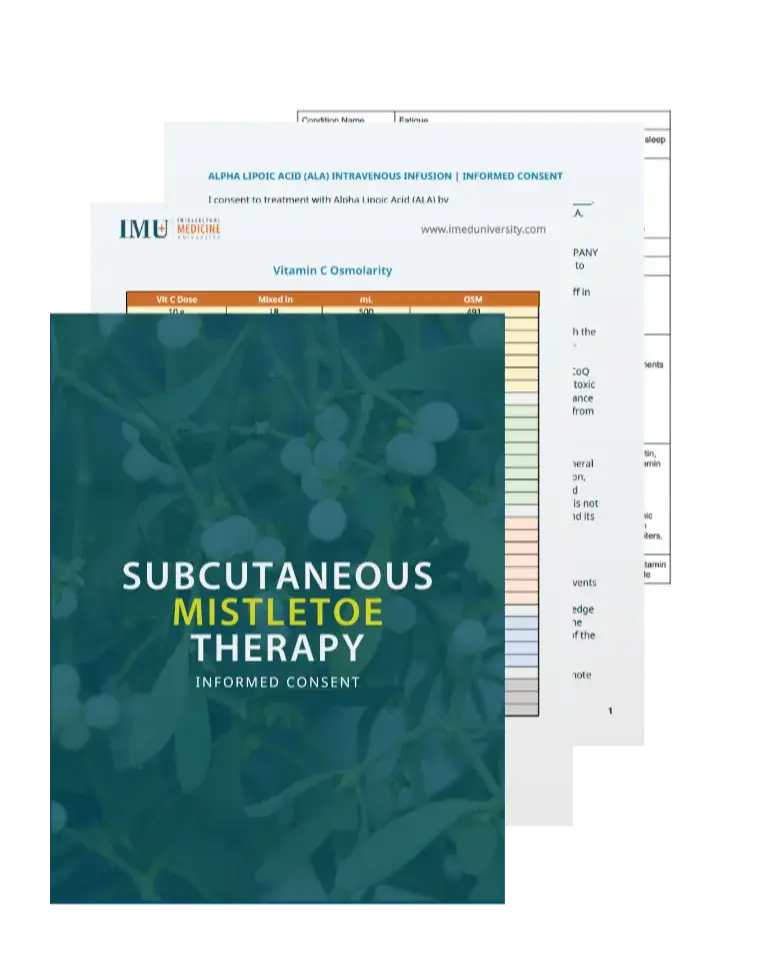
Integrative Breast Cancer Certification
Program Curriculum
-
Introduction to Breast Cancer Treatment
3 lessons- Lesson 1: Objectives, Disclosures and Downloads
- Lesson 2: Presentation with Dr. Petteruti
- Breast Cancer Treatment and Support Therapies Post Test

If you are treating a lot of cancer patients, I would recommend the Advanced Cancer, Breast Cancer and Mistletoe. The content is extremely comprehensive, they are the best!
Who Should Enroll?
This program is designed for licensed healthcare professionals involved in functional medicine, IV therapy, metabolic medicine, women’s health, or integrative cancer support.
It is appropriate for physicians, nurse practitioners, physician associates, nurses working under appropriate clinical supervision, and other qualified medical professionals who want to expand their knowledge of complementary breast cancer support.
All therapies must be provided within the participant’s existing professional license, prescribing authority, state regulations, employer policies, and applicable standards of care.
Add to CartAdd Integrative Breast Cancer Support to Your Practice
Dr. Petteruti also addresses the clinical and operational requirements of adding breast cancer support services to a healthcare practice.
You will learn how IV therapy, supplementation, nutrition guidance, symptom support, and ongoing monitoring can work together within an organized program. The implementation section covers patient screening, documentation, informed consent, staff preparation, pricing, treatment packages, follow-up, and long-term supportive-care options.
The objective is to establish a service that is patient-centered, clinically responsible, and financially sustainable.
The Add-on You Didn't Know You Needed
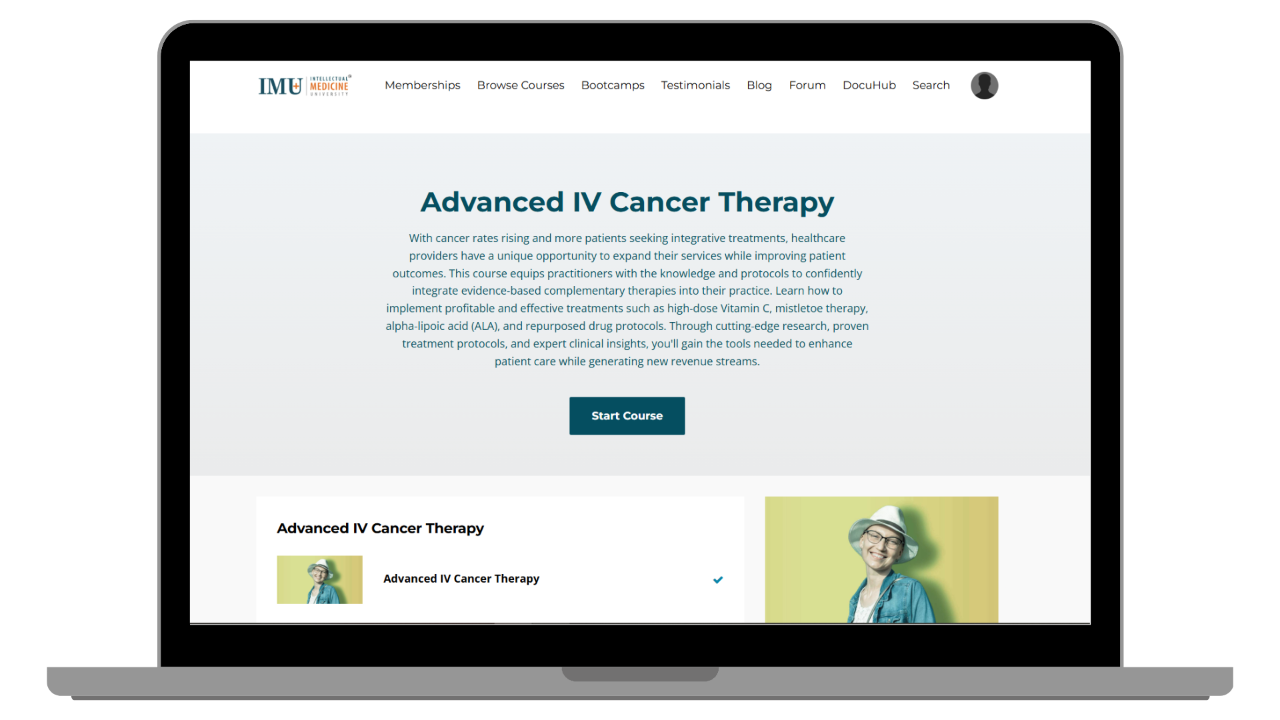
Advanced IV Therapy in Integrative Cancer Care | 8 CEU
Add high-dose vitamin C, mistletoe, ALA, and repurposed drugs to improve cancer outcomes and expand your services.
$499.00 USD
Alpha Lipoic Acid Therapy: IV Protocols and Clinical Applications | 1.5 CEU
Learn IV and oral Alpha Lipoic Acid protocols for liver support, neuropathy, cognitive decline, cancer care & more in this clinical CE course.
$149.00 USD
Mistletoe Therapy for Cancer: A Profitable Addition to Integrative Oncology | 2 CEU
Integrate viscum dosing and administration into oncology care, complete with business guidance for recurring revenue.