Popular Peptides Used in Functional Medicine and Weight Loss
May 12, 2026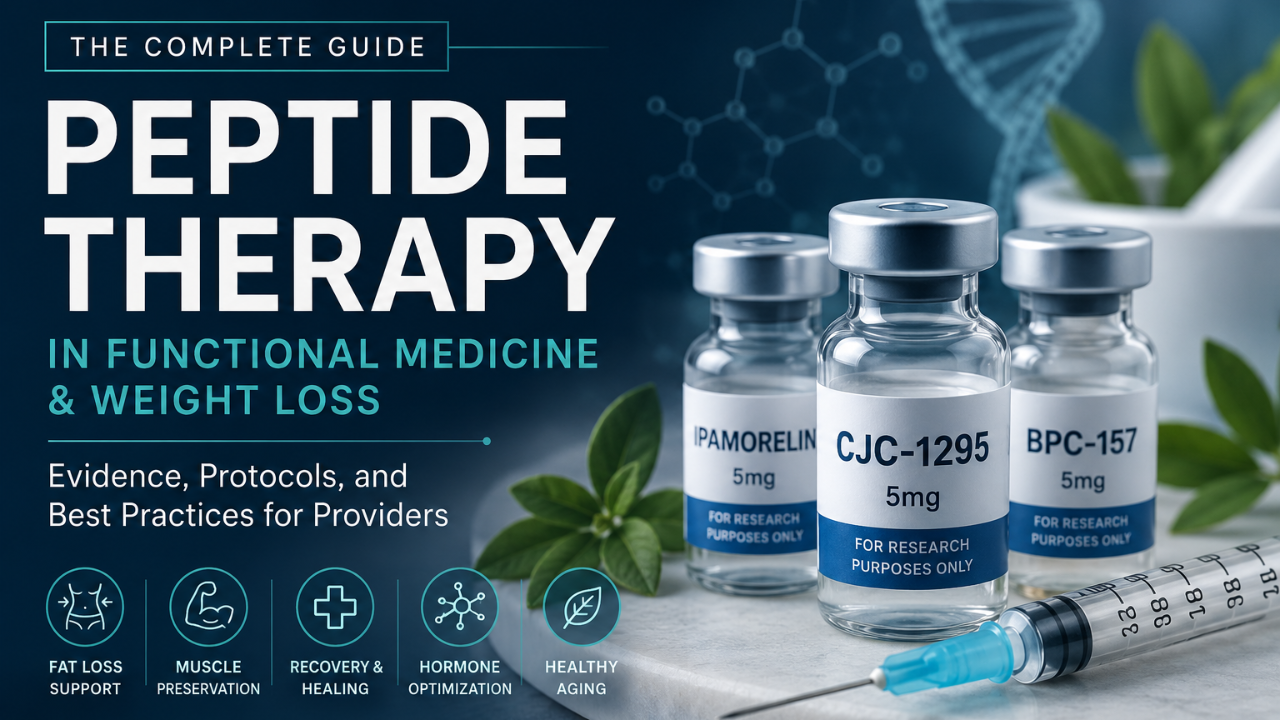
Peptide therapy has rapidly become one of the fastest-growing areas in functional medicine, anti-aging medicine, metabolic health, and medical weight loss. Healthcare providers are increasingly using peptides to support fat loss, muscle preservation, recovery, hormone optimization, inflammation reduction, and healthy aging.
As patient demand for longevity-focused and performance-based medicine continues to rise, nurse practitioners and functional medicine providers who understand how to properly integrate peptide therapy into clinical practice will be better positioned to improve patient outcomes while expanding modern wellness and regenerative medicine services.
But successful peptide therapy involves far more than simply prescribing injections. Effective peptide protocols require thoughtful patient selection, personalized treatment strategies, quality sourcing, ongoing monitoring, lifestyle optimization, and strong patient education. When used appropriately, peptides can become a valuable tool within a broader functional medicine and metabolic health framework.
What Are Peptides?
Peptides are short chains of amino acids that function as signaling molecules within the body. They help regulate communication between cells and influence physiologic processes such as:
- Growth hormone release
- Fat metabolism
- Tissue repair
- Muscle recovery
- Inflammation
- Immune function
- Skin health
- Sleep quality
Because peptides target specific physiologic pathways, they are increasingly being explored in anti-aging medicine, sports recovery, longevity medicine, and weight management programs.
Several peptides have become increasingly popular in functional medicine, regenerative medicine, and medical weight loss programs because of their potential effects on recovery, metabolism, body composition, and healthy aging.
CJC-1295 and Ipamorelin are among the most commonly used growth hormone secretagogue peptides and are often explored for supporting body composition, fat loss, muscle preservation, recovery, sleep quality, and healthy aging. Unlike direct hormone replacement, these peptides stimulate the body’s natural growth hormone signaling pathways.
BPC-157 has gained significant attention for its potential role in tissue healing, gut support, inflammation reduction, musculoskeletal recovery, and regenerative medicine protocols. Many providers integrate BPC-157 into recovery-focused treatment strategies for patients dealing with injuries, inflammation, or GI-related concerns.
AOD-9604 was specifically developed to support fat metabolism and weight management. Providers often explore its use in metabolic health and body composition programs because it was designed to target fat metabolism without significantly affecting blood glucose levels.
Thymosin Alpha-1 is frequently discussed in functional medicine for immune support, inflammation regulation, and longevity-focused wellness strategies. Melanotan II is most commonly recognized for pigmentation support, though some providers have also explored its potential effects on appetite regulation and weight management.
One of the biggest mistakes providers make with peptide therapy is using a generalized, one-size-fits-all approach. Effective peptide protocols should be individualized based on each patient’s goals, metabolic health, body composition, hormonal status, lifestyle habits, recovery needs, and overall treatment response.
Some patients are primarily focused on fat loss and metabolic improvement, while others are seeking support for recovery, muscle preservation, performance, sleep optimization, or healthy aging. The treatment strategy should reflect those priorities while remaining clinically appropriate, carefully monitored, and integrated into a broader functional medicine framework.
Peptides also work best when they are combined with a comprehensive lifestyle and metabolic medicine strategy rather than used as standalone interventions. Without proper nutrition, exercise, sleep, stress management, and metabolic support, many patients struggle to maintain long-term results regardless of the peptide protocol being used.
Providers should continue emphasizing high-protein nutrition, resistance training, sleep optimization, inflammation reduction, muscle preservation, and sustainable lifestyle changes alongside peptide therapy. The goal is not simply short-term weight loss or symptom improvement. The goal is improving long-term metabolic health, physiologic resilience, and sustainable patient outcomes.

Choosing High-Quality Peptide Sources
Peptide quality matters significantly in clinical practice. Healthcare providers should work only with reputable, licensed compounding pharmacies and trusted peptide sources that prioritize sterility, purity, accurate dosing, regulatory compliance, and consistent quality testing.
Poor-quality peptides increase the risk of contamination, inconsistent dosing, reduced efficacy, and avoidable patient complications. As peptide therapy continues to grow in popularity, sourcing and quality control remain critical parts of protecting patient safety, clinical outcomes, and provider credibility.
Educating Patients on Peptide Therapy
Patient education plays a major role in improving compliance, setting realistic expectations, and achieving better long-term outcomes with peptide therapy. Providers should help patients understand what peptides are, how they work within the body, expected treatment timelines, potential side effects, and the lifestyle factors that influence overall results.
Because many peptides are administered through subcutaneous injection, patients also need clear instruction on sterile injection technique, refrigeration requirements, proper dosing schedules, and injection site rotation. Patients who understand the process and the reasoning behind their treatment plan are far more likely to remain compliant, engaged, and successful throughout therapy.
Monitoring Patients During Peptide Therapy
Peptide therapy should never be treated as a “set it and forget it” intervention. Ongoing monitoring allows providers to evaluate body composition changes, assess metabolic health, track symptom improvement, adjust dosing, identify side effects, and optimize long-term outcomes over time.
Providers should regularly monitor factors such as weight, muscle mass, energy levels, recovery, sleep quality, metabolic markers, and hormonal biomarkers to ensure treatment remains both effective and clinically appropriate. The most successful peptide programs are highly individualized and continuously adjusted based on patient response, evolving goals, and overall physiologic progress.
Potential Side Effects of Peptide Therapy
While peptide therapy is often well tolerated, providers should still educate patients about potential side effects and set realistic expectations before treatment begins. Some patients may experience injection site irritation, mild water retention, temporary fatigue, nausea, or appetite changes depending on the peptide being used and the individual’s physiologic response.
Careful patient selection, appropriate dosing, ongoing monitoring, and proper education all play a major role in reducing complications and improving the overall patient experience throughout peptide therapy.
The Future of Peptide Therapy in Functional Medicine
Peptide therapy continues to evolve rapidly as research expands across longevity medicine, metabolic health, weight loss, recovery medicine, muscle preservation, hormone optimization, and healthy aging. As patient interest in preventative and performance-focused healthcare continues to grow, providers who develop a deeper understanding of peptide therapy, metabolic medicine, and body composition management will likely remain at the forefront of modern functional and preventative medicine.
Final Thoughts
Peptides are becoming an increasingly valuable tool in anti-aging medicine, functional medicine, and medical weight loss. But long-term success requires far more than simply prescribing a peptide.
The providers who achieve the best outcomes will be those who combine:
- Personalized medicine
- Metabolic health strategies
- Lifestyle optimization
- Body composition analysis
- Patient education
- Ongoing monitoring
Because sustainable health is rarely built from one intervention alone.
It is built from a comprehensive approach to optimizing human physiology.
Ready to Expand Your Functional Medicine Knowledge?
As patient demand for preventative, metabolic, and root-cause medicine continues to grow, providers who understand advanced lab interpretation and personalized treatment strategies will be increasingly valuable in modern healthcare.
At Intellectual Medicine University, our courses are designed to help nurse practitioners and healthcare providers apply real-world functional medicine strategies directly into clinical practice.
Explore our CE-accredited courses covering:
- Functional medicine
- Weight loss and metabolic health
- Hormone optimization
- Lab interpretation
- GLP-1 therapies
- Longevity-focused care
- Practice growth strategies
Whether you are building a new functional medicine practice or expanding your current clinical model, IMU provides practical education built from decades of real patient experience.
Explore Courses at Intellectual Medicine University → https://www.imeduniversity.com/
References
- Ipamorelin, the first selective growth hormone secretagogue. Smith RG, et al. Endocrine Reviews. 1997.
https://academic.oup.com/edrv/article/18/5/621/2530777 - Growth hormone secretagogues and peptide therapy in aging and body composition. Bartke A, et al. Frontiers in Endocrinology. 2021.
https://www.frontiersin.org/articles/10.3389/fendo.2021.695972/full - BPC-157 and its role in healing, angiogenesis, and tissue repair. Sikiric P, et al. Current Pharmaceutical Design. 2018.
https://pubmed.ncbi.nlm.nih.gov/29231754/ - AOD-9604 and fat metabolism research in obesity management. Ng FM, et al. Obesity Research. 2000.
https://pubmed.ncbi.nlm.nih.gov/10902704/ - Peptide therapeutics: current status and future directions. Fosgerau K, Hoffmann T. Drug Discovery Today. 2015.
https://www.sciencedirect.com/science/article/pii/S1359644615001409