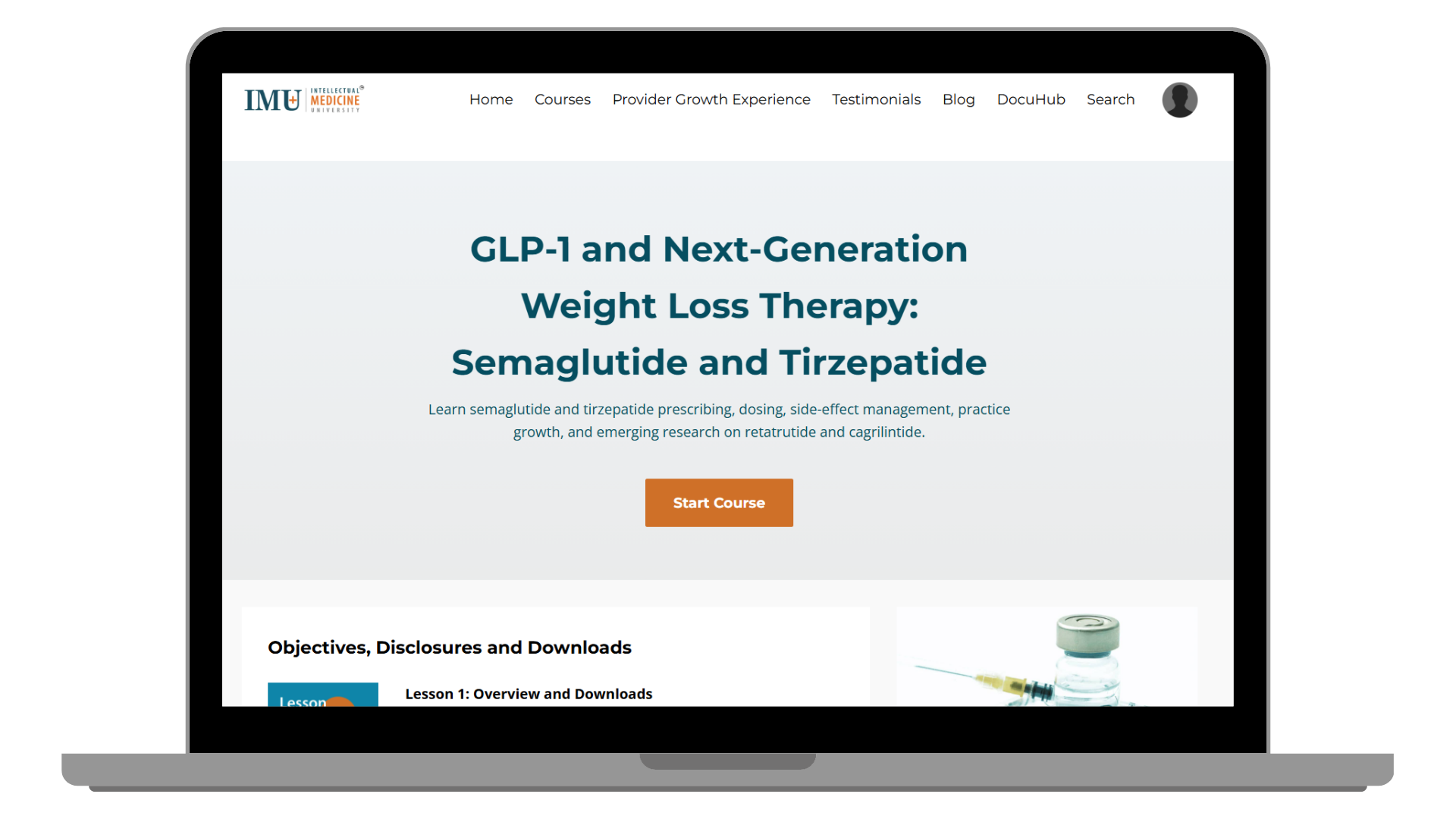
GLP-1 and Next-Generation Weight Loss Therapy
Semaglutide, Tirzepatide, Retatrutide, Cagrilintide, and Practice Implementation
$399
Learn semaglutide and tirzepatide prescribing, dosing, side-effect management, practice growth, and emerging research on retatrutide and cagrilintide.
Add to CartBuy $200 use code SPEND200 for 10% off | Buy $500 use code SPEND500 for 15% off
4
CEU
Lifetime
Access
Shannon Petteruti & Jessica Doto
Instructor
Advanced Medical Weight Loss Training for Healthcare Providers
The participants will be taught how to prescribe, monitor, and manage semaglutide and tirzepatide, as well as how to prepare for the incorporation of future-generation obesity treatments such as retatrutide and cagrilintide.
The thorough online course shows healthcare professionals how to set up a structured medical weight loss program using patient selection, individualized dosing, side-effect management, laboratory monitoring, nutrition, muscle-preservation techniques, and long-term follow-up.
The course also looks at the latest clinical trial data concerning retatrutide and cagrilintide, covering their mechanisms of action, study results, safety findings, and potential future uses in obesity and metabolic medicine.
Why Healthcare Providers Need Advanced GLP-1 Training
Semaglutide and tirzepatide have greatly changed the way obesity and type 2 diabetes are managed. Even though there is strong patient demand for these drugs, effective treatment involves more than just prescribing injections.
For medical weight management to be successful, it is necessary to carry out careful patient selection, properly adjust the treatment, manage any side effects, provide nutrition, include resistance training, preserve muscle mass, carry out metabolic monitoring, plan the transition to medication, and offer long-term support.
The course offers healthcare professionals the clinical and operational framework they need in order to put into practice a comprehensive medical weight loss program, going beyond those that involve medication only.
Add to Cart4 CEU
Approved for nursing providers
Self-paced
Learn on your own schedule
100% Online
Access the course from anywhere
Protocols and consent forms
Included with your purchase
What You Will Learn
Obesity Biology and Incretin Pharmacology
Explore appetite control, insulin signaling, glucagon, gastric emptying, energy balance, adipose tissue, metabolic adaptation, and the hormonal pathways involved in regulating weight.
Find out how the GLP-1, GIP, glucagon, and amylin pathways affect appetite, blood glucose levels, body weight, and metabolic health.
Semaglutide Prescribing and Dosing
Learn how to examine patients, choose the right starting dose, adjust the treatment, evaluate the response, manage side effects, and decide when to suspend, lower, or stop semaglutide.
The course includes content on formulations for obesity and diabetes, approved indications, what to expect in terms of treatment, what to do if doses are missed, medication transitions, monitoring, and long-term care.
Tirzepatide Prescribing and Dosing
Outline the combined effects of tirzepatide on GIP and GLP-1, the indications for which it has been approved by the FDA, the way it is dosed, the process of titration, the expected response, the safety considerations, and the requirements for follow-up.
The course outlines how Dr. Petteruti individualizes dose progression based on appetite control, weight trajectory, side effects, metabolic response, and specific treatment goals.
Retatrutide: The Triple-Agonist Pipeline
Look at retrutide's combined effect on the GLP-1, GIP, and glucagon receptors.
The course looks at published clinical trial results, covering Phase 3 weight-loss and metabolic outcomes, the dosage used in the studies, adverse effects, and unanswered questions.
Retatrutide is still under investigation and has not been approved by the FDA, is not commercially available, and is not allowed to be used in compounding.
Cagrilintide and CagriSema
Find out how cagrilintide functions as a long-acting amylin analog and in what ways it differs from GLP-1 and dual-agonist medications.
The clinical trial results for cagrilintide either on its own or in combination with semaglutide as CagriSema are reviewed. The course looks at appetite control, the weight-loss results, the dosing used in the study, the safety findings, and the evolving regulatory pathway.
Cagrilintide is not currently approved by the FDA or allowed to be compounded.
Patient Selection and Contraindications
Find out how to assess a patient's medical history, their past attempts to lose weight, their current medications, their metabolic health, their eating habits, any gastrointestinal conditions they have, their risk for pregnancy, their history of gallbladder problems, their risk of developing pancreatitis, their kidney function, and any personal or family history of endocrine disorders.
The course also includes those findings which need further evaluation or referral prior to treatment.
Side-Effect Management
Prepare practical strategies for nausea, vomiting, constipation, diarrhea, reflux, abdominal discomfort, reduced appetite, dehydration, dizziness, fatigue, and reactions at the site of injection.
Know when to perform a slow titration, decrease the dose, suspend therapy, request further testing, or refer the patient for an urgent evaluation.
Laboratory Testing and Monitoring
Assess baseline and follow-up tests in light of the patient's medical history, diagnosis, medication choice, and clinical risk.
Learn how to monitor glucose levels, HbA1c, kidney function, liver health, lipid levels, nutritional status, body composition, blood pressure, symptoms, and response to medication.
Muscle Preservation During Weight Loss
Find out why scale weight by itself is an incomplete measure of success.
The course includes coverage of protein intake, resistance training, body-composition monitoring, recovery, sleep, hormone levels, and methods for reducing unnecessary loss of lean mass during treatment.
Nutrition and Behavior Change
Find out how to include treatment plan goals related to protein, meal structure, hydration, fiber, portion awareness, resistance exercise, sleep, stress management, and motivational interviewing.
Medication ought to support changes in behavior and metabolism rather than take their place.
Long-Term Treatment and Weight Regain
Review the need for maintenance dosing, how long treatment should last, considerations for tapering, stopping the medication, weight regain, how often patients should have follow-up visits, and what patients can expect.
Find out how to draw up a long-term plan before the patient gets to their goal weight.
Preventing Dosing Errors
Find out how to prescribe and record doses in milligrams rather than depending solely on "units."
Review concentration calculations, choose the appropriate syringe, give the patient instructions, check the written instructions, verify the medication labels, and use error-reduction methods that apply to compounded multidose vials.
Practice Implementation
Set up a full workflow covering consultation, screening, laboratory testing, obtaining consent, prescribing, follow-ups, medication education, support for side effects, monitoring body composition, and long-term maintenance.
The course covers how to incorporate GLP-1 therapy into a primary care, functional medicine, hormone, metabolic, or healthy-aging practice.
Marketing and Patient Acquisition
Learn how to educate potential patients, provide an accurate description of your program, establish your authority, produce digital content, and communicate the benefits of medical oversight.
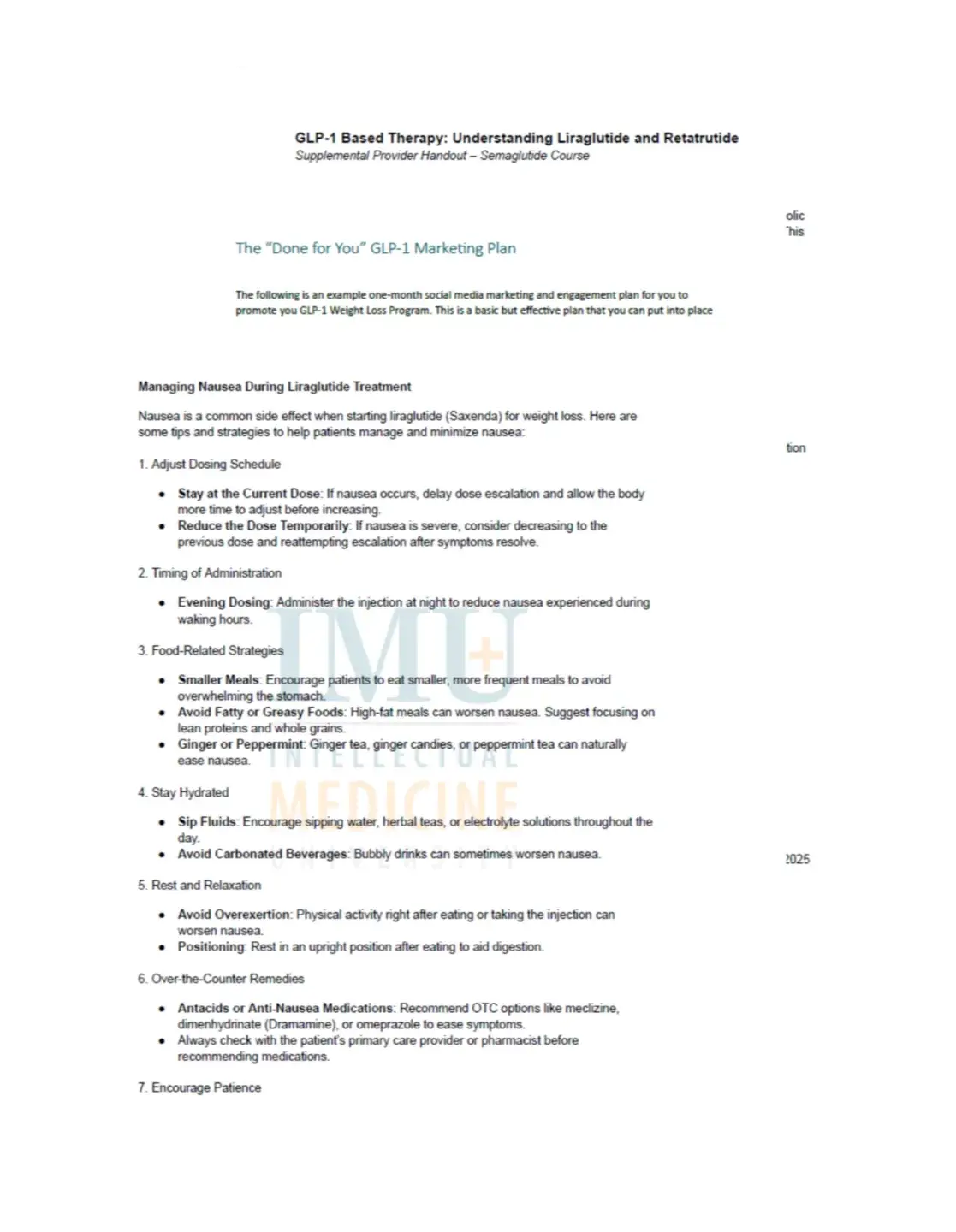
The course provides a marketing plan prepared for you, along with patient education materials and strategies for promoting the program without guaranteeing weight loss or advertising products that have not been approved.
Pricing, KPIs, and Practice Growth
Find out how to set prices for consultations, follow-up visits, body-composition tests, laboratory reviews, medication-management services, and long-term programs.
Track inquiries, consultations, enrollment, retention, revenue, treatment continuation, and patient outcomes using the provided KPI Master Glossary.
Commercial and Compounded Medications
You should understand the differences between FDA-approved brand medications, compounded products, active pharmaceutical ingredients, salt forms, dosing units, multidose vials, and prefilled syringes.
The course covers the current FDA policies, modifications related to shortages, pharmacy qualification, dosing errors, sterility, patient education, and documentation.
Compounded medications are not FDA-approved, and their legal availability depends on federal policy and the situation regarding drug shortages.
Course Resources Included
The course features prescribing guidelines for semaglutide and tirzepatide, advice on how to carry out titration, patient-screening tools, resources for managing side effects, consent forms, patient education materials, clinical workflows, a ready-made marketing plan, and the KPI Master Glossary.
It also provides clinical training on retatrutide and cagrilintide so that healthcare providers will understand the emerging pipeline for obesity treatments before patients start asking about these drugs.
Learn From the Clinical Experience of Shannon Petteruti and Jessica Doto
Shannon Petteruti
NP-C, APRN
Shannon is dedicated to helping individuals achieve optimal vitality and longevity. As a Certified Nurse Practitioner, she specializes in hormone optimization, weight management, libido enhancement, and muscle preservation, empowering clients to live healthier, more energetic lives
Jessica B. Doto
BSN, MSN, APRN, ANP-C
Jessica is the Director of Educational Innovation & Outreach at Intellectual Medicine University. She is nationally board-certified as an Adult Nurse Practitioner by the American Academy of Nurse Practitioners (AANP). Her background spans emergency care, flight nursing, hospital medicine, and intensive care.
Learn More
GLP-1 and Next-Generation Weight Loss Therapy
Program Curriculum
-
Objectives, Disclosures and Downloads
3 lessons- Lesson 1: Overview and Downloads
- Lesson 2: Course Objectives
- Lesson 3: Disclosures and CE Credit
-
GLP-1/GIP Presentation
2 lessons- Become the Expert
- Semaglutide/Tirzepatide Post-Test

Nurse practitioner

IMU courses are amazing, the support from the admin team is top notch. The fb group support help individuals have a better understanding of protocols. The courses are affordable. I highly recommend taking your next course with IMU.
Who Should Enroll?
The course is aimed at physicians, nurse practitioners, physician associates, registered nurses, and other healthcare professionals who are interested in obesity medicine, GLP-1 therapy, metabolic health, functional medicine, or medical weight management.
Add to CartBuild a Complete Medical Weight Loss Program
The course supplies providers with the clinical and business background necessary to prescribe semaglutide and tirzepatide, manage side effects, protect muscle, monitor outcomes, and support patients during treatment.
You'll also become well acquainted with retatrutide and cagrilintide so you can answer patient questions, identify illegally marketed products, interpret new research, and prepare for future FDA-approved treatments.
Add to CartThe Add-on You Didn't Know You Needed

Mind-Body Medicine Certification | 3 CEU
Learn how stress, the brain, hormones, and the immune system influence chronic disease. Discover evidence-based mind-body medicine for better patient outcomes.
$299.00 USD
NAD+ Therapy Certification: IV and SubQ Techniques | 3 CEU
Provide IV and SubQ NAD⁺ for anti-aging and recovery while leveraging turnkey protocols and marketing playbooks.
$299.00 USD
Low Dose Naltrexone (LDN) Therapy
Prescribe low dose naltrexone with clarity, confidence, and real clinical strategy—not guesswork.