
BPC-157 and TB-500 Clinical Protocols for Providers
Aug 18, 2026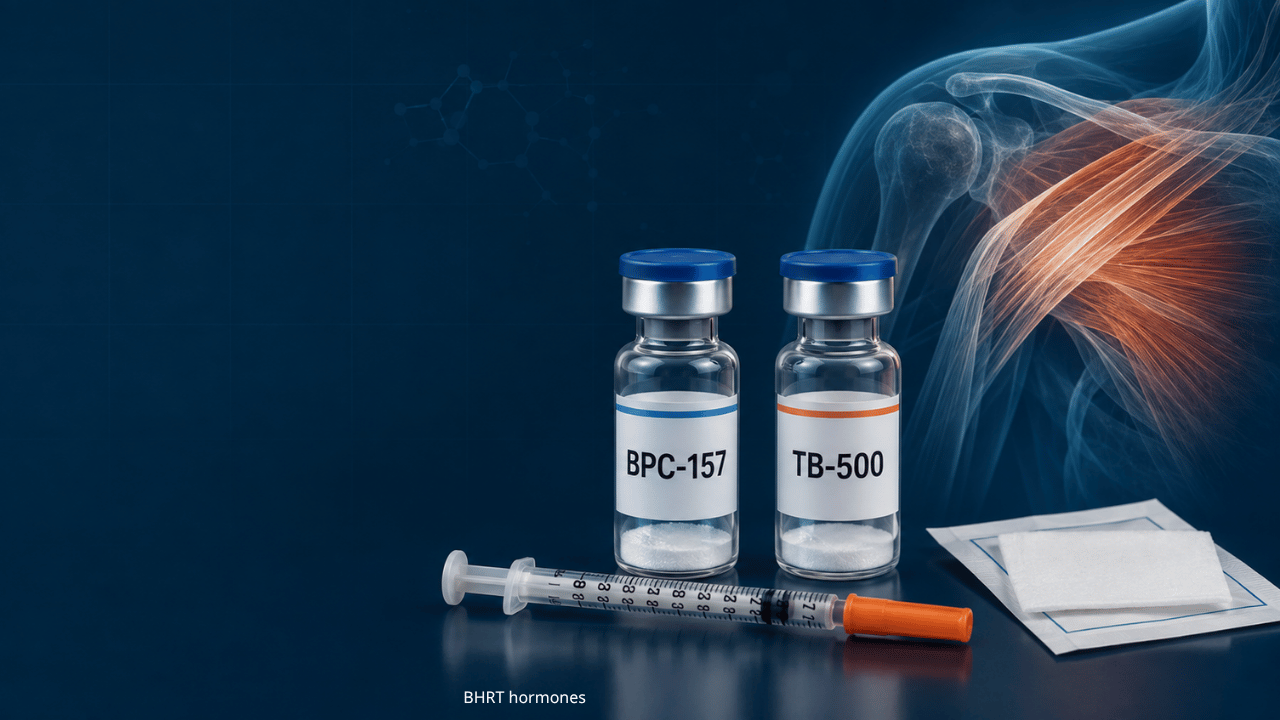
Written by Shannon Petteruti, Nurse Practitioner
Published August 18, 2026
Last reviewed August 18, 2026
Requests for BPC-157 and TB-500 clinical protocols are rising as peptide therapy for tissue repair gains traction in functional medicine, sports medicine, and regenerative practice. Providers are generally aware of BPC-157 and TB-500 but lack a unified clinical framework that integrates both peptides into a structured protocol. Existing information is fragmented across non-clinical forums, marketing materials, and anecdotal reports intended for patients rather than prescribers. This article addresses that gap by providing a comprehensive clinical protocol.
This article presents a comparative clinical reference detailing mechanisms of action, patient selection criteria, dosing, reconstitution procedures, route selection, and documentation requirements. Both peptides are used off-label and lack FDA approval for any human indication. While this does not preclude their clinical use, it necessitates enhanced documentation, informed consent, and monitoring protocols compared to approved therapies. Establish these systems prior to administering the initial injection.
Rationale for combining BPC-157 and TB-500 in tissue repair protocols
Complementary mechanisms, not redundant ones
BPC-157 and TB-500 act through distinct biological pathways, which makes the combination clinically rational. BPC-157 promotes tendon-to-bone healing, supports growth-factor signaling, and protects mucosal tissue. TB-500, a synthetic analog of Thymosin Beta-4, drives actin polymerization, accelerates cell migration, promotes angiogenesis, and has been associated with anti-inflammatory effects in some preclinical reports. These mechanisms are not redundant; they are thought to operate in separate but interconnected phases of the repair process, though mechanistic confirmation in humans is currently lacking.
BPC-157 functions primarily as a structural rebuilder, while TB-500 acts as a vascular and cellular mobilizer. For providers managing complex musculoskeletal injuries, chronic soft-tissue pathology, or post-surgical recovery, this complementary mechanism provides the principal clinical rationale for combining the two peptides rather than selecting one. This rationale is based on mechanistic inference from preclinical data; no controlled human trials have demonstrated superior outcomes for the combination compared to either agent alone. Communicate this limitation clearly during patient counseling.
Clinical indications where the combination protocol is most commonly applied
Practice-based protocol literature most often applies the BPC-157 and TB-500 combination to tendon, ligament, and muscle injuries accompanied by inflammation. Acute sports injuries with documented tissue damage, chronic tendinopathies unresponsive to standard care, and post-surgical connective tissue recovery are the primary indications cited in clinic protocols. These cases require simultaneous structural repair and vascular support. It is important to reiterate that controlled human trial evidence supporting the combination for any specific indication remains unavailable.
BPC-157 is suitable for isolated gastrointestinal or mucosal healing, while TB-500 is occasionally used for broader soft-tissue indications. When the clinical objective is accelerated structural tissue repair with concurrent vascular and cellular support, the combination offers a more comprehensive mechanistic approach. Patients should be informed that this recommendation is based on preclinical and practice-level evidence rather than regulatory-grade clinical trial data.
Patient candidacy for BPC-157 and TB-500 clinical protocols
Building a candidacy profile before you prescribe
Appropriate candidates for combination BPC-157 and TB-500 therapy include adults with documented soft tissue injuries, post-surgical recovery requirements, or chronic musculoskeletal conditions unresponsive to first-line treatments. Candidates should be in good overall health, not pregnant or breastfeeding, and without active malignancy. Athletes, active adults, and post-operative patients are typically the most engaged, as they have defined functional recovery goals and are motivated to adhere to injection schedules.
Prior to protocol initiation, ensure the patient understands that both peptides are off-label, lack FDA approval, and that robust controlled human trial data are limited. Record this discussion in the intake documentation. Verbal acknowledgment during the visit is insufficient; the off-label status and data limitations must be documented in writing before administering the initial injection.
Contraindications and pre-treatment safety screening
The pre-treatment checklist for this protocol is mandatory. Screen all patients for active malignancy, prior solid tumor history, pregnancy, lactation, and current use of anticoagulants, corticosteroids, biologics, or immunosuppressants. Perform a comprehensive personal and family cancer history assessment; refer to genetics or oncology if hereditary risk is suspected. Both peptides are potentially pro-angiogenic, making cancer screening particularly critical. Obtain baseline CBC and CMP at a minimum.
TB-500 presents a rare but documented risk of anaphylaxis. Verify that patients have no known hypersensitivity to either peptide or excipients prior to the initial injection. Pediatric patients and individuals with active autoimmune disease should only receive this protocol under specialist supervision and with documented clinical justification. Patients using anticoagulants require a thorough risk-benefit assessment due to potential interactions with coagulation. The use of warfarin, direct oral anticoagulants, or high-dose antiplatelet agents requires additional discussion and documentation before protocol initiation.
Reconstitution, storage, and injection technique
Calculating concentration and preparing each vial
Both peptides arrive as lyophilized powders and require reconstitution with bacteriostatic water to ensure multi-dose stability. The formula is straightforward: concentration in mg/mL equals the peptide mass divided by the solvent volume in mL. A standard BPC-157 preparation uses a 5 mg vial with 2 mL of bacteriostatic water, yielding a 2.5 mg/mL (2,500 mcg/mL) stock. For TB-500, a 5 mg vial with 2 mL produces the same 2.5 mg/mL concentration.
Inject the diluent slowly along the inside wall of the vial, swirl gently until fully dissolved, and avoid shaking. Label each vial with the peptide name, concentration, reconstitution date, and provider initials. Store reconstituted vials at 2 to 8 degrees Celsius and utilize a new sterile needle for each withdrawal. U-100 insulin syringes are preferred for dose measurement in peptide reconstitution protocols, as 0.1 mL corresponds to 10 units, facilitating accurate small-volume dosing.
Injection route selection by indication
Route selection follows the target tissue. For tendon and ligament indications, peritendinous or tendon-sheath injection is preferred; avoid direct intratendinous injection due to the risk of rupture. For diffuse musculoskeletal injury or systemic tissue repair, subcutaneous injection in the abdomen or flank is the standard route for both peptides. For wound-adjacent or dermatologic indications, perilesional subcutaneous injection is appropriate.
TB-500 is typically administered subcutaneously as part of combination protocols. BPC-157 may be delivered subcutaneously for systemic musculoskeletal indications, or orally and sublingually for gastrointestinal mucosal repair. Record the route, site, and technique in the patient chart at each session. For off-label protocols, thorough documentation of subcutaneous peptide injections serves as both clinical and legal record.
BPC-157 and TB-500 dosing guide for combination protocols
BPC-157: typical dose ranges and cycle structure
Clinic-based protocols for BPC-157 typically recommend a daily dose of 200 to 500 micrograms, with higher doses of 600 to 750 micrograms reserved for severe or chronic injuries. The most common initial dose is 250 micrograms per day via subcutaneous injection, with a standard cycle length of 4 to 6 weeks for acute injury protocols. For chronic or gastrointestinal-focused indications, cycles may extend to 8-12 weeks, incorporating a 2-4-week rest period between courses.
Twice-daily dosing, dividing the total daily dose between morning and evening injections, is employed by some providers for more aggressive cases. A regimen of 500 micrograms per day, split as 250 micrograms twice daily, is commonly reported in practice-level protocol documentation. Select the initial dose based on injury severity and patient weight, rather than defaulting to the highest recommended dose.
TB-500: loading phase, maintenance phase, and weekly totals
TB-500 utilizes a structured induction-to-maintenance dosing pattern rather than a fixed continuous regimen. The loading phase generally lasts 4 to 6 weeks, with 2 to 2.5 mg administered subcutaneously twice weekly, for a total of 4 to 5 mg per week. Higher-intensity protocols may employ up to 5 mg twice weekly during the loading phase for severe injuries, though this represents the upper limit reported in physician-supervised protocols.
Following the loading phase, maintenance dosing is reduced to 2-2.5 mg once weekly for an additional 4-8 weeks, after which clinical reassessment is conducted. In combination protocols, TB-500 injections may be scheduled on the same days as BPC-157, but should be administered at distinct injection sites. Record each injection date, dose, site, and lot number in the patient record at every visit. This level of documentation is standard for off-label injectable protocols and is essential for addressing potential future inquiries.
Monitoring, informed consent, and follow-up structure
What to document and when to reassess patients
A structured monitoring schedule distinguishes a defensible off-label protocol from an improvised approach. The following framework reflects typical clinic workflow practices rather than standardized, evidence-based guidelines; adapt it to your clinical setting and document the rationale for any modifications.
- Baseline visit: CBC, CMP, and documented written informed consent before any injection
- Week 2 check-in: Assess tolerability, review injection technique compliance, and address any early adverse effects
- Week 4 mid-cycle reassessment: Evaluate clinical response using validated outcome tools such as VAS pain scores and functional movement assessments
- End-of-cycle review: Decide on continuation, dose adjustment, or discontinuation based on objective findings
Relying solely on subjective patient reporting is inadequate. Employ objective measures consistently and document them in the patient chart at each assessment point. Any new unexplained symptoms, signs of injection site infection, or coagulation abnormalities necessitate prompt reassessment. Off-label protocols entail increased provider accountability due to the absence of formal prescribing guidance.
Informed consent language and red flags for stopping treatment
The consent document for this protocol must explicitly outline the investigational status of both peptides, the lack of FDA approval, limited human trial data, and the known adverse event profile. Adverse events include nausea, headache, dizziness, injection site reactions, and the rare but serious risk of anaphylaxis associated with TB-500. Document that the patient received and understood this information, and was informed of their right to discontinue treatment at any time without impacting their care.
Indicators for discontinuing the protocol include persistent or worsening injection-site reactions; signs of an allergic response, such as rash, hives, throat tightness, or difficulty breathing; new unexplained bleeding; or a newly identified malignancy during treatment. Provide each patient with a written stop-and-call instruction sheet at the baseline visit. Including this sheet in the consent package demonstrates thorough consideration of safety prior to initiating therapy.
Implementing a BPC-157 and TB-500 clinical protocol in your practice
Assembling a compliant, well-documented combination peptide protocol requires more time than many providers anticipate. Clinical decision-making is only one aspect; documentation, consent language, monitoring templates, and intake forms constitute the other, often overlooked, component in which providers may encounter delays and increased risk.
IMED University developed its peptide therapy course to address this specific gap. The course provides a clinical framework for BPC-157, TB-500, and other peptides used in regenerative and functional medicine, including rationale for combination protocols, dosing guidance, and patient communication strategies. The DocuHub library offers downloadable combination peptide protocol templates, customizable for individual clinic setups, covering intake documentation, informed consent, dosing logs, and follow-up tracking in clinically structured formats. For providers seeking to transition from protocol understanding to practical implementation, IMED University alleviates the documentation burden that impedes many practices.
The bottom line
Successful implementation of a BPC-157 and TB-500 clinical protocol requires more than accurate dosing knowledge. These peptides are combined due to their complementary mechanisms: one facilitates structural repair, while the other promotes vascular and cellular mobilization. This rationale is derived from preclinical data rather than controlled human trials, and patient communication should clearly convey this distinction. Safe delivery of this requires structured patient selection criteria, comprehensive informed consent, precise reconstitution procedures, a phased dosing plan, and a monitoring strategy to promptly identify complications.
A clinical framework for BPC-157 and TB-500 combination protocols has been established, with documented dosing patterns from practice-based sources and protocol templates available through clinical training resources. The remaining task is implementation. Integrate the framework presented in this article into your clinical workflow, supported by appropriate training and documentation to ensure proper protocol execution.