
How to Start an IV Drip Business: A Step-by-Step Guide
Aug 13, 2026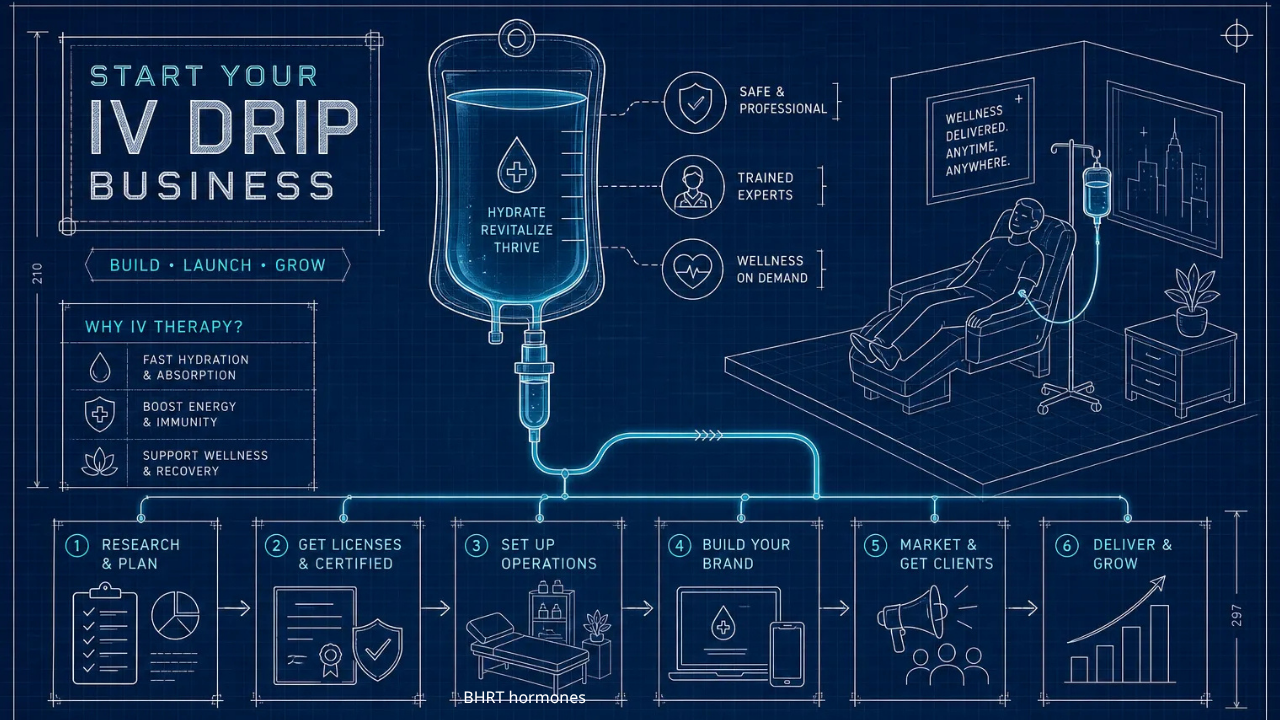
Written by Shannon Petteruti, Nurse Practitioner
Clinically reviewed by Stephen Petteruti, DO
Published August 13, 2026
Last reviewed August 13, 2026
If you are considering starting an IV drip business, the opportunity in 2026 is significant, but so are the compliance challenges that often hinder new entrants. The IV therapy industry has evolved from a niche service to a mainstream wellness offering. Across the United States, IV hydration clinics and mobile IV services generate steady cash-pay revenue without the need for insurance contracts or prior authorizations, reducing the overhead that limits traditional clinical practices. This model is attracting many new participants. While revenue varies by market, booking volume, and competition, the advantages of a cash-pay structure are well established in the wellness sector.
Many new entrants underestimate the compliance infrastructure required before treating any patients. Starting an IV drip business involves selecting the appropriate legal structure for your state, securing medical oversight, establishing clinical documentation systems, and assembling a qualified team—all before investing in marketing. Early failures often result from overlooking these compliance steps, not from a lack of clinical skill, but from treating the launch as a retail venture rather than a regulated medical service.
This guide outlines each major decision in order: business model selection, licensing and legal structure, startup costs, clinical infrastructure, pricing strategy, and patient acquisition. By the end, you will understand your commitments and the initial steps to take.
1. How to Start an IV Drip Business: Choose Your Model Before Spending a Dollar
This decision determines all subsequent costs, licensing, and hiring. There are two primary models for IV therapy: a mobile service, where a nurse or nurse practitioner travels to clients, and a fixed-location clinic, where patients visit your facility. Each model has unique startup requirements, ongoing expenses, and growth potential.
Mobile vs. clinic: startup costs and break-even timelines compared
A mobile IV business can start with $10,000 to $30,000 for a solo setup, while multi-nurse operations may require $30,000 to $100,000. A fixed-location clinic typically needs $50,000 to $150,000 or more, mainly due to lease deposits, build-out, furnishings, and higher staffing costs. The key difference is monthly overhead: a mobile business without rent can weather slow periods, while a fixed clinic with significant rent cannot.
Break-even timelines reflect these differences. Mobile IV businesses often reach profitability within three to six months, depending on booking volume, local pricing, and costs. Fixed-location clinics usually require nine to eighteen months due to higher fixed expenses. Both timelines depend on effective marketing and pricing strategies.
How your goals and capital should drive the choice
If you are a single nurse practitioner testing the market, a mobile model offers speed, flexibility, and lower overhead. It allows you to validate demand and build a patient base before investing in a physical location. If you aim to build a brand, hire a team, or offer a comprehensive wellness menu, a fixed clinic provides a stronger patient base and higher average transaction value. Choose the model that fits your current situation.
2. Navigating the Legal and Licensing Requirements
Many first-time IV business owners struggle with legal and licensing requirements. Mistakes can result in cease-and-desist orders, license revocation, or personal liability. There is no national license for IV drip businesses; requirements are determined at the state level in three areas: business entity structure, clinical staff credentials, and medical oversight. All must be in place before treating patients.
Business entity structure and corporate practice of medicine rules
Many states follow the Corporate Practice of Medicine (CPOM) doctrine, which limits non-physician ownership of clinical entities. California, New York, and New Jersey require physician-owned structures, often using an MSO/PC model. Florida permits non-physician ownership with a physician medical director, though details vary by state. Texas enforces CPOM strictly, with significant physician supervision and ordering requirements. Confusing these rules can result in costly structural errors. Selecting the wrong entity initially can require a complete and expensive restructuring.
States such as Alabama allow broader ownership but require a physician, PA, NP, or CNM to examine patients before treatment. Arizona mandates a valid medical order from a licensed prescriber before administering IV therapy. Each state has specific compliance requirements. Consult a healthcare attorney in your state before forming your business entity.
Medical director requirements and standing orders
In many states, a licensed physician must provide oversight, written standing orders, and approval of protocols for IV services. In some cases, other licensed prescribers may fulfill this role, depending on state regulations. Confirm your state's requirements with a healthcare attorney or medical board. A medical director agreement should define the scope of oversight, chart review, and emergency protocols. Monthly fees typically range from $500 to $2,000 for smaller practices, depending on scope and market. Operating without a proper agreement places you outside state requirements, regardless of your clinical documentation.
Facility permits and clinical staff credentials
Depending on your state, you may need a healthcare institution license, health department approval, or local business permits in addition to standard LLC registration. Clinicians must hold active licenses in the state where patients are treated. Your staffing structure, whether RNs, NPs, or PAs, must comply with state-specific delegation and supervision rules. Noncompliance can result in licensing board complaints and civil liability.
3. Startup Costs and Equipment: What You Need to Open
Once you have selected your model and confirmed state requirements, you can create an accurate budget. New IV businesses often underbudget for compliance and documentation while overbudgeting for equipment, which can create legal risks before treating patients. While clinical equipment is important, compliance infrastructure is essential for legal and sustainable operations.
Realistic budget ranges by business model
A basic mobile IV setup, including business registration, initial supplies, medical director fees, insurance, and marketing, typically costs $10,000 to $30,000. A larger mobile operation with a dedicated vehicle and staff costs between $30,000 and $100,000. A fixed IV hydration clinic, with lease deposit, build-out, and higher insurance, usually requires $50,000 to $150,000 for a small storefront in a mid-sized market.
Essential equipment and consumables you can't operate without
Every IV drip service requires, at minimum, IV poles or infusion pumps, IV catheters and administration sets in various gauges, saline flushes, transparent dressings, antiseptic prep, a blood pressure monitor, and a pulse oximeter. Emergency equipment, such as an AED and oxygen supply, is mandatory. If you store temperature-sensitive vitamins or compounded injectables, a medical-grade refrigerator is required from the start.
In addition to equipment, allocate budget for PPE and a 30-day supply of consumables before opening. Ensure sharps containers and biohazard waste disposal are in place before treating patients. Running out of consumables or failing an inspection due to inadequate waste protocols can delay your practice more than the initial licensing process.
4. Building the Clinical Foundation That Keeps You Compliant and Operational
Securing a medical director and appropriate staff credentials is only the first step. Ongoing operations depend on robust clinical infrastructure, including treatment protocols, standard operating procedures, patient consent forms, infusion notes, and staff training documentation. While less visible than equipment, this documentation protects your business during adverse events or regulatory reviews.
Why protocols and documentation matter more than you expect
Each IV treatment requires a valid medical order, a documented patient assessment, signed informed consent, and an infusion note that details the products administered, lot numbers, drip rate, start and stop times, and adverse event monitoring. Without thorough documentation, a single incident can expose your business to liability beyond what insurance covers. Regulatory boards and attorneys review documentation first when assessing complaints.
Where IMED University supports new IV businesses
Creating these documents from scratch takes weeks and requires clinical-legal review to meet state standards. IMED University offers a DocuHub library with downloadable clinical protocols, SOPs, EMR templates, patient intake forms, and consent packets designed for IV therapy and functional medicine practices. These materials are developed by practicing clinicians and reflect real-world workflows. Users should review the library and confirm alignment with their state's requirements before use.
IMED University also offers accredited IV therapy CEU courses that cover clinical competency and operational topics, such as practice setup and marketing. Clinicians can earn CE credit while building essential business knowledge. Access to pre-built compliance documentation helps new clinics launch more efficiently by reducing time-consuming setup tasks.
Staffing structure and scope-of-practice considerations
Most IV businesses use an RN or NP model for IV administration, with a medical director providing oversight and standing orders. Your staffing structure must comply with your state's delegation rules. NP practice authority varies by state. In full-practice-authority states such as Colorado, Oregon, and Washington, NPs can practice more independently, reducing oversight complexity and costs. In states such as Texas and Florida, NPs should confirm supervision requirements with the nursing board before finalizing agreements. Where NP authority is restricted, the supervision chain must be clearly documented in your medical director agreement and protocols.
5. Pricing Your Services and Modeling Real Revenue
Many new IV business owners underprice services or copy competitors without understanding the underlying economics. Both strategies reduce profitability. Pricing should reflect your cost structure, market positioning, and required margins to cover overhead and generate income.
Per-visit revenue on a well-structured IV drip menu
Standard hydration drips typically cost $80 to $175 in the U.S. Myers' cocktail and vitamin infusions range from $175 to $275. Premium options such as NAD+ infusions are priced between $500 and $1,500, depending on the dose and protocol. Add-ons such as glutathione, vitamin C, Toradol, and Zofran cost $15 to $50 each and offer strong gross margins. The average visit, including one standard drip and two add-ons, usually totals $200 to $300, which is favorable for a cash-pay service.
The most profitable menu combination is a Myers' cocktail or hydration base with a glutathione push and a symptom-relief add-on. NAD+ infusions generate the highest revenue per appointment but require longer chair time and higher consumable costs. Both options are valuable, but focus your menu on high-volume, high-margin services rather than offering every possible treatment at launch.
Memberships and packages as your recurring revenue engine
Single-visit pricing forms your foundation, but memberships and packages create predictable monthly revenue. Offering two to four IV sessions per month at a discounted rate increases patient retention, stabilizes cash flow, and boosts lifetime customer value. Corporate wellness accounts, event bookings, and IV party packages are additional revenue streams, especially for mobile businesses in urban areas. These channels also generate more word-of-mouth referrals due to their social nature.
6. Marketing Your IV Therapy Business and Acquiring Your First Patients
Even a compliant, well-equipped IV business requires patient bookings. For most clinics and mobile services, the most effective early marketing channels are local search, visual social content, and referral partnerships, rather than broad brand advertising. Focus on building local visibility and trust in the first 90 days; other strategies can follow.
Digital channels and local visibility
Optimizing your Google Business Profile is the most effective starting point. Most IV therapy searches are local and high-intent, so appearing in map results for terms like "IV drip near me" generates consistent leads without paid ads. Claim your profile, complete all fields, add photos, and enable booking integration if available. Support this with a mobile-friendly website featuring clear pricing, a prominent call to action, and online booking.
Instagram and TikTok are effective for IV businesses due to the visual nature of the service and tangible results. Behind-the-scenes videos, before-and-after content, and patient testimonials perform well in wellness-focused feeds. Invest in consistent content creation from the start to build discoverability over time.
Referral partnerships and community presence
To quickly build volume in the first 90 days, establish referral relationships with complementary businesses such as fitness studios, chiropractors, physical therapists, aesthetic clinics, and functional medicine physicians. Offer co-marketing or sponsor a staff wellness day to introduce your service. Once these partners experience your service, they become advocates and referral sources. Corporate wellness accounts are also valuable, especially for mobile IV businesses that can serve offices and events directly.
Frequently Asked Questions About Starting an IV Drip Business
Do you need a medical director to start an IV drip business?
In most states, yes. A licensed physician medical director is required to provide written standing orders, oversee protocols, and conduct chart reviews for IV therapy services. Some states allow other licensed prescribers to fulfill certain oversight functions, depending on scope and structure, but the specific requirements vary. Confirm your state's rules with a healthcare attorney or your state medical board before launching.
Can a nurse practitioner own an IV drip business?
Ownership rules depend entirely on your state's Corporate Practice of Medicine (CPOM) statutes. Some states allow non-physician ownership with appropriate medical oversight; others require a physician-owned structure. An NP can own the business entity in many states, but must still have a compliant medical director agreement in place. Research your state's CPOM rules and consult a healthcare attorney before forming your entity.
What licenses do you need to open an IV hydration clinic?
At minimum: a properly structured business entity, a medical director agreement with written standing orders, active clinical staff licenses in the state where patients are treated, and any state-specific facility permits or health department approvals. Some states require a healthcare institution license even for small wellness clinics. Requirements vary; verify yours with state-specific regulatory guidance.
Is an IV therapy franchise worth considering?
An IV therapy franchise can reduce some launch complexity by providing brand recognition, operational systems, and supplier relationships. The tradeoff is higher upfront fees and ongoing royalties that compress margins. Whether a franchise makes sense depends on your capital position, your tolerance for building systems independently, and the availability of franchise territory that aligns with your target market.
The Path From Decision to First Patient
If you are committed to starting an IV drip business, prioritize compliance before marketing. Success depends on selecting the right model, forming the correct legal entity, securing medical oversight, and establishing thorough clinical documentation. Develop your pricing strategy and patient acquisition plan only after this foundation is in place.
Providers who launch efficiently without compromising compliance use established resources rather than building infrastructure from scratch. IMED University's accredited IV therapy certification courses and DocuHub clinical library provide protocols, SOPs, consent forms, and operational frameworks that significantly reduce development time. Clinicians earn CE credits for license renewal while building a documentation foundation for immediate use. Always verify that materials meet your state's requirements before implementation. Visit IMED University to explore the IV therapy certification course and browse the DocuHub library. The fastest path to your first patient is the one where every compliance box is checked before you buy your first IV pole.